China's interest in Africa (Tanzania's case)
A report on China's exports to Africa and it's effects on the local business. Some Western governments accuse it of disregard for human rights and so on, but that what they have been accused of for the last century or so, after all China didn't colonise Africa. The report goes into details on Tanzania's economic ties with China before China's shift to capitalism.
Darfur Eyewitness (Photos)
A collection of photos from Darfur, by Brian Steidle a former U.S. Marine and a member of the African Union team monitoring the conflict in Darfur.
Dr. Samuel Zemer’s photo collection of Chinese Muslims in 1920s and 1930s
A mesmerizing photo collection from Harvard library, by missionary Dr. Samuel Zemer, of Muslims in China in the 1920s and 1930s. Dr. Samuel dedicated himself to converting Muslims in the Middle East and China, while most of the Muslim world was colonised at the time. The photos are simply historical treasures. Let me warn you though, there's a lot of them.
Chinese History: Keeping Halal in the Ming dynasty
The story of two Chinese families, of Muslims origins, and how they debate how much to adopt from practices of their ancestors. The two families have fully assimilated and are no longer identified as Muslim.
BBC: China tea-houses (photojournal)
Photos from tea-houses and what goes on there. Traditional tea-houses in China are disappearing as the young and hip are opting for Starbucks and the like. But older generation are still going to tea-houses.
BBC: Lebanese Crisis Explained
A quick explanation of the basics of the current conflict in Lebanon, for those who would like to know what the fuss is all about.
Japan’s Culture Day Keeps Traditions Alive
Photos from Japan's cultural day, Japanese culture isn't only about Sushi, Sumo and Samurai.
Technocrati Tags: Links
Nov 26, 2006


Nov 21, 2006
Elections in Mauritania
 One more African country is taking slow steps towards peace and conflict resolution. Mauritania's parliamentary election have ended and the preliminary results have been just released, the opposition is leading.
Unlike the recent DR Congo presidential election, the process was free of violence. The ruling party, who came to power by a bloodless cue didn't take part in the election, as promised. The election was transparent, well organised, and supervised by hundreds of election monitors from EU, Arab League and AU. The turn out was estimated at 70%-80%.
Though Mauritania had recently joined the growing number of, mostly, underdeveloped, African nations with oil and gas wealth (alongside Sudan, Zambia, Angola ... etc) , it remains one of the poorest countries in Africa. There are major social problems as well, not long ago the Mauritania was one of the rare country that had "active" slavery, in fact, some say it still exists despite anti-slavery legislation . According to CIA Factbook " mixed Maur/black 40%, Moor 30%, black 30%".
This is great for Mauritania and Africa. Mauritania has a better chance - by having a democratically elected government - to lift itself out of poverty and wisely utilise its oil wealth.
Technocrati Tags: Africa
Nov 19, 2006
Fresh Attacks in Darfur by Janjaweed and Sudanese Gov.
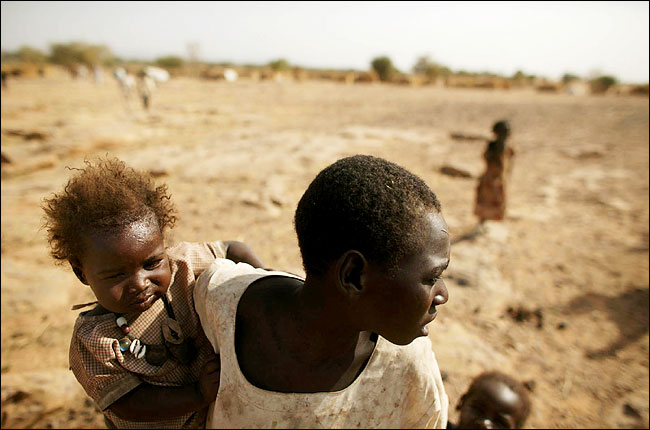
The Sudanese government along with Janjaweed carried fresh attacks in Darfur resulting in many civilian casualties, says the African Union peacekeeping troops. Aljazeera reports from Darfur:
The AU Mission in Sudan (AUMIS) reported a "heavy toll on the civilian population" after aerial bombardments, which suggests government forces' involvement, and ground attacks were carried out by Arab militia, in Birmaza in northern Darfur, on Wednesday and Thursday.The African troops stationed in Darfur are unable to stop the attack, protect civilians or disarm the militias. Earlier, Sudan agreed in principal to let a UN force join the African Union troops, but there were conflicting statements from the UN and the Sudanese government of the extent and mandate of the UN forces.
Andrew Simmons, Aljazeera's correpsondent in Dafur, reported that AU sources had said up to 70 civilians were killed in the attacks, but that the Sudanese government had not yet confirmed this figure.
Technocrati Tags: Conflict, Africa
Nov 18, 2006
Conflict, Racism and AIDS in the Muslim world
Not many Muslims now about Xinjiang and Uighur people in China, and their suffering under communist China. This is a region that I deeply care about, and one of the reasons I decided to learn Chinese in Uni (a work in progress). I haven't had the chance to go there yet, Luckily though, there's a way to keep informed of what's happening there; blogger Michael Manning blogs from Xinjiang (one of the best blogs around) and reports on everything (check the Uighur music out). Recently he had a disturbing post on AIDS in Xinjian; it has officially the highest AIDS infection in China at 0.3% of the population (Reprinted from NYT).
In Indian-Kashmir, BBC reports fewer grooms for Kashmiri women as a result of the occupation and insurgency there.
Africans from the continent have also been started immigrating to Turkey in search for a better life. They come from Nigeria, Sudan, Somalia, Mali, Egypt and Algeria.
You can find the report here(in Arabic).
Technocrati Tags: Asia, Muslim World
In Indian-Kashmir, BBC reports fewer grooms for Kashmiri women as a result of the occupation and insurgency there.
Social scientists in the state capital, Srinagar, say the age at which women are getting married has undergone a significant change.
Until about a decade ago, most Kashmiri families would see their daughters married off before they turned 25. Now, this has stretched to as late as 35 years.
Africans in Turkia, who have been brought to Turkia centuries ago as slaves, are gathering in a city in Western Turkia. The gathering is organized by Moustafa Olbak, an African-Turk who previously published two books on racism against African Turks. Turkish nationalists have criticised the summit.
Africans from the continent have also been started immigrating to Turkey in search for a better life. They come from Nigeria, Sudan, Somalia, Mali, Egypt and Algeria.
You can find the report here(in Arabic).
Technocrati Tags: Asia, Muslim World
Another Darfur?
The situation in Darfur is only getting worse for the millions fleeing the Janjaweed. While Darfur is having most of the attention, just over the border in Chad there is the same racial mix and incompetent government, Arab militias are killing Africans. This is not only along the border with Sudan but deep inside Chad, 100 km or so. BBC reports that:
Technocrati Tags: Conflict, Africa
At least one village, Djorlo, has been burned to the ground, and there are reports that some attackers climbed up trees in order to shoot at their victims below. Many of the dead have already been buried in mass graves.The Chadian government, like its neighbour to the east, is weak and incompetent and is battling rebels in the east of the country. Like it was the case with Darfur few years ago, everyone sees the looming crisis already getting out of hand, as the BBC's Stephanie Hancock says :
The attackers were from local Arab groups, while the villages attacked were non-Arab - mainly Dadjo and Moro. The aggressors reportedly shouted: "You slaves. We have arrived and now we are attacking you."
Aid workers described the attacks as a massacre, and say they are a mirror image of Darfur.
But these attacks took place deep inside Chad, at least 100 kilometres from the Sudan border.
ethnic tensions have been on the rise in south-eastern Chad for many months, but there are signs the violence is beginning to spin out of control.The key to averting another Darfur-like genocide is a solution to the Darfur question and the disarmament of the Janjaweed. The Sudanese government has accepted in principal for a UN role along-side the African Union troops, but the details of the UN role (who leads who?) and a deployment time-frame hasn't been agreed yet. The question is, will that happen before the situation completely gets out of hand in Chad?
Technocrati Tags: Conflict, Africa
Nov 15, 2006
Aljazeera English ... finally
Aljazeera English is officially on air, English speakers all over the world can finally see the famous Aljazeera for themselves.
Aljazeera will be broadcasting mainly from Doha but also from Malaysia, London and Washington 12 hours then going 24hrs on Jan 07. It will predictably have a "southern" focus on the Middle East, Africa and Asia. In its first day, Aljazeera had reports from Palestine, Darfur, Iran, DR Congo and Zimbabwe wonderfully setting the scene what is to come. The reports from DR Congo elections was great and there an exclusive interview with Kabila, I didn't expect the guy to be that articulate. But the report from Zimbabwe was more compelling with massive waiting line for oil, sometime for a week.
The interviews today (and the next couple of days) is mesmerizing, some of the interviewees are Ismail Haniyeh, Joseph Kabila, Shimon Peres , Richard Haas, Tony Blair (Frost on Friday), ... and the list continues.
This is what the BBC said about the launch:
 Technocrati Tags: Aljazeera, Middle East
Aljazeera will be broadcasting mainly from Doha but also from Malaysia, London and Washington 12 hours then going 24hrs on Jan 07. It will predictably have a "southern" focus on the Middle East, Africa and Asia. In its first day, Aljazeera had reports from Palestine, Darfur, Iran, DR Congo and Zimbabwe wonderfully setting the scene what is to come. The reports from DR Congo elections was great and there an exclusive interview with Kabila, I didn't expect the guy to be that articulate. But the report from Zimbabwe was more compelling with massive waiting line for oil, sometime for a week.
The interviews today (and the next couple of days) is mesmerizing, some of the interviewees are Ismail Haniyeh, Joseph Kabila, Shimon Peres , Richard Haas, Tony Blair (Frost on Friday), ... and the list continues.
This is what the BBC said about the launch:
A screen graphic with a clock ticking down the minutes gave way to a photo montage of the biggest news stories of recent years, including 9/11.Ethan Zuckerman (and other bloggers) welcomed Aljazeera English, he says:
Al-Jazeera in Arabic is known for its forthright style, frank journalism and willingness to discuss taboo issues.
This has made it a thorn in the side of governments from Washington to Riyadh, says the BBC's Ian Pannell in Cairo.
We will be getting our reaction, first and foremost, from the Middle East
Felicity Barr, presenter
After the opening credits, presenters Shiulie Ghosh and Sami Zeidan ushered in the new channel, saying it would be "setting the news agenda".
"It's November 15th, a new era in television news."
The channel then went to images of correspondents in various locations including Gaza then Sudan's Darfur region, followed by Iran and Zimbabwe.
As it went on air, the channel had to contend with a breaking news story on a tsunami expected to hit Russia and northern Japan.
I feel strongly that Al Jazeera International is a good thing. I think a lot of the criticism Al Jazeera’s Arabic service receives are, frankly, off the mark, and more a reflection of Western news coverage of Jazeera than the truth of what’s on the network. My experiences in Doha were of a network determined to bring debate to every possible issue, going out of their way to put people who disagree with one another on camera in the hopes of knocking sparks. It’s worth remembering that Al-J isn’t just a thorn in the side of the Bush administration - they drive the Saudis nuts as well.Aljazeera English was also relaunched its website which has twostreaming video and RSS feeds.
Technocrati Tags: Aljazeera, Middle EastBREAKING NEWS: Aljazeera's on air
 Aljazeera English has launched with a BANG and a new gorgeous website. I'll have more to say about it but for now, you can see a video of the first few minutes of the broadcast here.
A new era in international media has begun, please digg it and link to it.
Technorati Tags: Middle East, Media
Nov 14, 2006
Gold from the stone by Ethiopian Poet Lemn Sissay
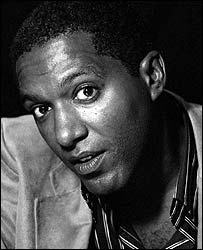 As part on the ongoing debate over Madonna's adoption of an African boy, the BBC had an interesting conversation with Ethiopian poet, playwright and author Lemn Sissay who was adopted by a white family in England. He is against the Madonna's adoption but I liked his poem titled Gold from the stone, so here it's:
Gold from the stone
Gold from the stone
Oil from the Earth
I yearned for my home
From the time of my birth
Strength of a mother's whisper
Shall carry me until
The hand of my lost sister
Joins onto my will
Root to the earth
Blood from the heart
Could never from birth
Be broken apart
Food from the platter
Water from the rain
The subject and the matter
I'm going home again
Can't sell a leaf to a tree
Nor the wind to the atmosphere
I know where I am meant to be
And I can't be satisfied here
Can't give light to the Moon
Nor mist to the drifting cloud
I shall be leaving here soon
Costumed, cultured and crowned
Can't give light to the Sun
Nor a drink to the sea
The Earth I must stand upon
I shall kiss with my history
Sugar from the cane
Coal from the wood
Water from the rain
Life from the blood
Gold from the stone
Oil from the earth
I yearned for my home
From the time of my birth
Food from the platter
Water from the rain
The subject and the matter
I'm going home again
Gold from the stone
Oil from the earth
I yearned for my home
From the time of my birth
Nov 13, 2006
Coordinated attack on the Arab people
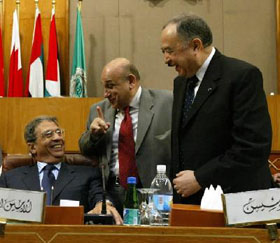 The Arab league continued to defendits reputation as an impotent and ineffective organization - rather successfully - in its recent "response" to the US veto. Firstly, they knew, before introducing the doomed resolution, that US will veto anything condemning Israel, so what did they go ahead with it? some say to embarrass the United States, is that the best Arabs can hope? I think it was at least coordinated with the United States, so Arab regimes can appear to be doing something and keep the Arab masses silent. But that was not all, Arabs declared they will lift the embargo on the Palestinian government and will never tolerate it. Well, the Palestinians were being starved for more than 6 months, did the Arabs just find out? No, it was another coordinated and convenient setup coming just days or hours before the announcement of a Palestinian unity government, accepted by the EU, Israel and US, how convenient you say.
I see this as an assault on the intelligence of the Arab people by Arab regimes, Israel and US administration. Arab leaders abandoned the Palestinian people when they needed them most, for over six months Palestinian civil servants weren't paid and couldn't feed their families while fat Arab leaders withheld funds from them. These same Arab leaders want to take the credit no for lifting the embargo when it's the Palestinian people who had to sacrifice their democratically elected government in exchange food.
Technorati Tags: Middle East
Nov 11, 2006
Lebanon on a slippery slope ...
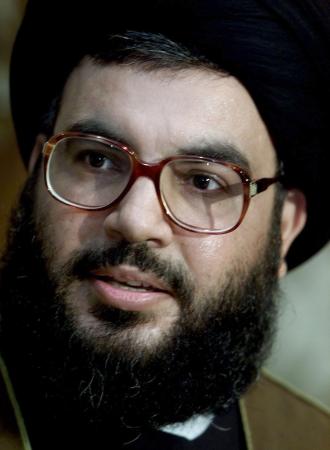 Shia ministers resigned from the Lebanese government after talks between major factions failed. More than two thirds of the ministers are still in their position so the government didn't collapse, but the move is ominous. Nasrallah and Michel Aoun made it clear they wanted the government to step down, more here:
The ministers that resigned were in charge of the foreign affairs, agriculture, health, energy and labour portfolios. More than eight ministers would need to resign for the government to fall.
Hezbollah wants a bigger role in the government especially when it's facing disarmament. Will Hezbollah supporters take to the streets as Nasrallah said?
Elsewhere, US vetoed a security council draft resolution codemning Israel massacre in Bait Hanun; not even a simple condemnation.
Technorati Tags: Middle East
US Elections, what difference does it make?
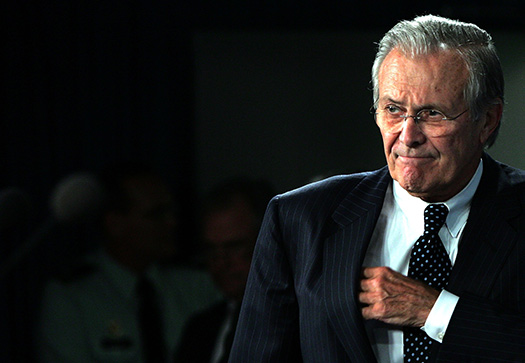 Like all other American popular culture, there's no escaping the US mid-term elections. Aljazeera, BBC and everyone else was covering it round the clock. I'm not fond of party politics, they're too local for me and I don't think they make any difference in the world at large, at least not profound enough. But this particular election was pronounced as significant and marking a "shift" in US foreign policy ... etc.
So does it really matter that much whether democrats or republicans win - particularly for the Middle East or Africa - and the answer is yes and no. In terms of Iraq, many observers think it might. In the US administration, the debate isn't about the horrendous consequences of US invasion and how to salvage the people of Iraq; but how the US can "win" the war. The few thousand dead American soldiers are worth much more than the hundreds of thousand of Iraqis killed and tortured or the welfare of millions of surviving Iraqis. In that respect, both parties are the same. Where the two parties differ, is the administration's refusal to recognize the disastrous consequences of the invasion, on all levels. But the democrats are at least talking about changing course, primarily to appeal to US voters, and that's better than refusing to acknowledge the scale of the disaster. Rumsfeld was the first casualty - though I'll miss his press conferences and his ruthless style - this might be a good signal but the administration's stance remains the same, to stay the course.
It doesn't matter for the Palestinian issue, the Israeli Lobby has a powerful grip on both parties - and public life - so regardless of who is in power the US will support everything Israel does and supply it with all it needs to do it. The lobby's grip is so solid that even a hint of support for Palestine or criticism of Israel is not tolerated particularly in academia and politics, in fact, there's more freedom to criticize Israel in Israel than in the US. The US elections make no different for Africa either, both parties have similar level of interest in the continent, none.
Technorati Tags: Middle East
Nov 8, 2006
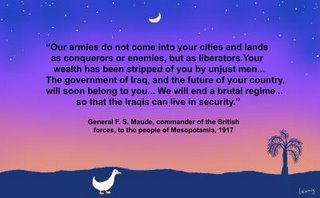
Blogger jailed in Egypt ...
Another blogger is imprisoned in Arabia, Abdel Kareem of Egypt. My heart goes to him and his family, being imprisoned in Egypt is unique in that you could end up being tortured (the police don't consider beating as torture). Here is a list of charges against Abdul Kareem, try not laugh (Hat Tip: The Arabist )
The allegations might sound absurd and ambiguous to you but, no far from it, especially when you know there are thousands who're in jail, tortured and sometimes executed without charges or tried in a military court (they give only two sentences there; jailed for life or death by hanging - these judges have it easy). So, in a painfully funny way, those charged with feeble and laughable allegations like the one mentioned above, have it easy.
But wait a sec, how about Tayseer Allouni, Aljazeera correspondent who was sentenced to 7 years in prison - and now under house arrest - in Spain, on what crime? interviewing Bin Laden (if that's a crime, then another two other Western journalist are guilty of) and of course for working for Aljazeera (Remember the monkey chant England football team played in Spain). And how about Sami Alhajj , Aljazeera cameraman in Afghanistan, detained and tortured in Gitmo without a trial for more than 3 years.
Spain, US and Arab regimes are reading from the same book (and page) but the EU and US are the ones preaching human rights and taking the higher moral ground - talk about double/trible standard.
Technorati Tags: MidEast
-Spreading statements and rumours that disturb public securityA campaign is underway demanding the bloggers release - that's what is great about the blogsphere.
-Insulting the President of the Republic
-Agitating for overthrowing the regime
-Agitating for hatred against Islam
-Misrepresenting Egypt, and hurting its image.
The allegations might sound absurd and ambiguous to you but, no far from it, especially when you know there are thousands who're in jail, tortured and sometimes executed without charges or tried in a military court (they give only two sentences there; jailed for life or death by hanging - these judges have it easy). So, in a painfully funny way, those charged with feeble and laughable allegations like the one mentioned above, have it easy.
But wait a sec, how about Tayseer Allouni, Aljazeera correspondent who was sentenced to 7 years in prison - and now under house arrest - in Spain, on what crime? interviewing Bin Laden (if that's a crime, then another two other Western journalist are guilty of) and of course for working for Aljazeera (Remember the monkey chant England football team played in Spain). And how about Sami Alhajj , Aljazeera cameraman in Afghanistan, detained and tortured in Gitmo without a trial for more than 3 years.
Spain, US and Arab regimes are reading from the same book (and page) but the EU and US are the ones preaching human rights and taking the higher moral ground - talk about double/trible standard.
Technorati Tags: MidEast
Nov 7, 2006
Insulting the King and the State
Tyranny and stupidity go hand-in-hand and unfortunately both flourish in the Arab world. Sometimes you wonder how far, just how far, can these regimes go without no one saying anything, and I think, very far. Take this ambiguous law in Jordan - and most other Arab countries - that forbids "insulting the King, Queen or the government", why can't the king or the government be insulted? But more importantly, what constitutes an insult? You might wonder why isn't anyone opposing such laws, well, if you do that then "you're insulting the king and the state because you approve of them being insulted" - you're in trouble.
The other day, Adnan Abu Odeh, one of the most prominent Jordanian politicians (head of Jordan's Royal Court and former Minister of Information for the late king Hussein) had an interview with Aljazeera in which he discussed - among other things - how Palestinian-Jordanians face discrimination. That's nothing new, he wrote that in a book sometime ago and it isn't secret by any means in Jordan or outside (for example, the top two football teams Faisaliya and Wihdat are Palastinian and Jordanain and are fierce rivals because of that). However, there was an uproar among Jordanian politicians and government officials, and some filed court cases against Abu Odeh, on what grounds? inciting ethnic hatred and guess under what law, you got it, insulting the king and the state.
What? How was that an insult to the king? How about that for a democracy and a caring government. Well, to be fair, this is the case in most Arab countries (and much of Africa). I should point out that they didn't get upset when he published the book, but because he spoke on Aljazeera, it's unforgivable. Finally, The government threw the case against Abu Odeh out - yes the government, not the court - but not all Jordanians are that lucky, some are taken to prison - sometimes without any charges - and I don't need to point out that Jordan is renowned for torture - a place where the use of torture isn't debate (Jordan is in a close race with Egypt as the torture capital of the world).
I'm still wonder who proposed this law? Did the king wake up one day and say " emmm ... how about if we make it illegal to insult me", just a thought.
The other day, Adnan Abu Odeh, one of the most prominent Jordanian politicians (head of Jordan's Royal Court and former Minister of Information for the late king Hussein) had an interview with Aljazeera in which he discussed - among other things - how Palestinian-Jordanians face discrimination. That's nothing new, he wrote that in a book sometime ago and it isn't secret by any means in Jordan or outside (for example, the top two football teams Faisaliya and Wihdat are Palastinian and Jordanain and are fierce rivals because of that). However, there was an uproar among Jordanian politicians and government officials, and some filed court cases against Abu Odeh, on what grounds? inciting ethnic hatred and guess under what law, you got it, insulting the king and the state.
What? How was that an insult to the king? How about that for a democracy and a caring government. Well, to be fair, this is the case in most Arab countries (and much of Africa). I should point out that they didn't get upset when he published the book, but because he spoke on Aljazeera, it's unforgivable. Finally, The government threw the case against Abu Odeh out - yes the government, not the court - but not all Jordanians are that lucky, some are taken to prison - sometimes without any charges - and I don't need to point out that Jordan is renowned for torture - a place where the use of torture isn't debate (Jordan is in a close race with Egypt as the torture capital of the world).
I'm still wonder who proposed this law? Did the king wake up one day and say " emmm ... how about if we make it illegal to insult me", just a thought.
Nov 6, 2006
Links for 7-11-2006
“The New Middle East” by Richard Haass
A great article in last months issue of Foreign Affairs. Haass, a man with immense influence in Washington discusses how the "New Middle East" - which the US government has been talking about - might look like. I discussed this topic in a post before the article during Condi gathering with "moderate" Arab leaders. In the article you can see that - it's assumed in US policy circles - whatever Israel does must be good and in the interest of the US (while Iran is a dangerous enemy)
Hungary-Suez Crisis: Fifty Years on - The Suez Crisis and The Hungarian Revolt
Richard Haass leads a discussion on Suez Crisis and Hungarian Revolt of 1956. It's a great and informative discussion on the reasons and impact of both events on the West, Cold War and - then - the rest of the world.
The former Israel Head of the National Security Council Giora Eiland talks about Israel's - and US - military strategies in this century and the major security threats facing the world - or Israel and US if you like. The most striking aspect is how natural it feels to those speaking that whatever Israel does is good for US and the world and that Israel's wars are also US's. I enjoyed listening to it, the discussion is very informative on many levels.
In the Line of Fire: Stories from Aljazeera correspondants facing dangerous situations during their work in places like Afghanistan, Palestine, Lebanon and Iraq.
BBC: Africa in Pictures: Some great pictures from Africa. My favorite the last one, the former Somali soldiers marshing, check the shoes they wearing :)
BBC: In pictures: Kenyan entrepreneur: This you Kenyan entrepreneur wants to be the Bill Gates of waste management.
Technorati Tags: Links
A great article in last months issue of Foreign Affairs. Haass, a man with immense influence in Washington discusses how the "New Middle East" - which the US government has been talking about - might look like. I discussed this topic in a post before the article during Condi gathering with "moderate" Arab leaders. In the article you can see that - it's assumed in US policy circles - whatever Israel does must be good and in the interest of the US (while Iran is a dangerous enemy)
Hungary-Suez Crisis: Fifty Years on - The Suez Crisis and The Hungarian Revolt
Richard Haass leads a discussion on Suez Crisis and Hungarian Revolt of 1956. It's a great and informative discussion on the reasons and impact of both events on the West, Cold War and - then - the rest of the world.
Middle East Conflict: The Nature of War in the 21st Century (Audio)
The former Israel Head of the National Security Council Giora Eiland talks about Israel's - and US - military strategies in this century and the major security threats facing the world - or Israel and US if you like. The most striking aspect is how natural it feels to those speaking that whatever Israel does is good for US and the world and that Israel's wars are also US's. I enjoyed listening to it, the discussion is very informative on many levels.
In the Line of Fire: Stories from Aljazeera correspondants facing dangerous situations during their work in places like Afghanistan, Palestine, Lebanon and Iraq.
BBC: Africa in Pictures: Some great pictures from Africa. My favorite the last one, the former Somali soldiers marshing, check the shoes they wearing :)
BBC: In pictures: Kenyan entrepreneur: This you Kenyan entrepreneur wants to be the Bill Gates of waste management.
Technorati Tags: Links
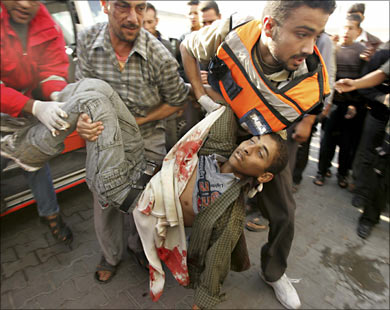
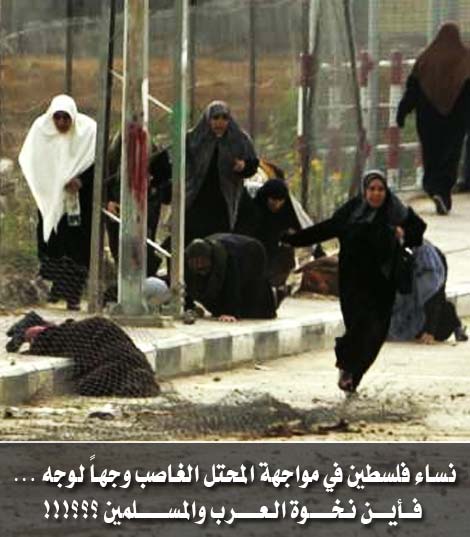
Photos from the Israel Invasion

Nov 5, 2006
Children's rights - or lack of it - in the Muslim world
Unfortunately, the Muslim world today is one of the most oppressive and backward anywhere in the world. We've most dictators, least respect for human rights and guess what? most resources and the fastest growing population. The paradoxes are many, but what made me rant about the desperate state of the Muslim world today - which I'll come back for some other time - is a BBC program discussing abuse of children's rights around the world and the first episode is about Pakistan. It's heart-wrenching but a must listen to, we need to understand how sick we have become. Children in Pakistan are jailed with grown up criminals, detained without trail for weeks and months, tortured and abused by corrupt guards and no rehabilitation whatsoever. I suspect other Muslim countries like Egypt, Jordan and Indonesia will be the same if not worse - shame on us.
Technocrati Tags: Human Rights, Muslim World
Technocrati Tags: Human Rights, Muslim World
Aljazeera English date set
Aljazeera confirmed that Aljazeera English will start broadcasting 15th Nov 06, and there will be an Aljazeera Magazine. Unlike the obscure beginnings of Aljazeera Arabic, the English channel has been anticipated for many months and millions are eager to finally watch Aljazeera (most of Aljazeera's critics don't speak Arabic and are relying on secondary information, not anymore). Aljazeera English will not be the same as the Arabic as they're catering for different audience and major competitors like CNN and BBC are keeping a close eye on it - happy anniversary Aljazeera.
Articles on Aljazeera last week:
Time: Tearing Down The Wall
Guardian:Al-Jazeera, a media revolution
Foreign Policy Blog: Happy Birthday, Al Jazeera
BBC: Al-Jazeera's popularity and impact
Technocrati Tags: Aljazeera, Media, Middle East
Articles on Aljazeera last week:
Time: Tearing Down The Wall
Guardian:Al-Jazeera, a media revolution
Foreign Policy Blog: Happy Birthday, Al Jazeera
BBC: Al-Jazeera's popularity and impact
Technocrati Tags: Aljazeera, Media, Middle East
Nov 3, 2006
Somalia Update
Update: There's a great discussion on Somalia and UIC on Radio Open Source.
It has been a while since I last discussed Somalia but here is a quick. UIC advanced on Baidao and took several smaller towns like Bur Hakabo and Diinsoor and some important roads linking Baidoa and Mogadishu. They've also consolidated their hold on Kismayo, effectively encircling the Transitional Government and becoming the strongest force south of Galkayo. The Transitional Government hasn't been silent either, they've gathered their troops along with their Ethiopian allies and seized control of Bur Hanakabo and Diinsoor only to give them up after few hours. The interesting part is that the Transitional Government/Ethiopians seem to be avoiding confrontation with UIC.
The peace conference in Sudan has been postponed mainly because of the involvement of neighboring countries. UIC is refusing Kenya to chair the meeting and demanding Ethiopian troops to leave Somalia. The militias of the Transitional Government and UIC are just 30km apart and seem to be preparing for a war.
After more than 15 years of lawlessness, UIC have strictly enforced law and order in Mogadishu, a concept that was increasingly becoming foreign to Mogadishu residents. It's amazing how UIC was able to turn-around Mogadishu from a place where life had no worth to a peaceful law abiding city.
Technocrati Tags: Somalia, Africa
It has been a while since I last discussed Somalia but here is a quick. UIC advanced on Baidao and took several smaller towns like Bur Hakabo and Diinsoor and some important roads linking Baidoa and Mogadishu. They've also consolidated their hold on Kismayo, effectively encircling the Transitional Government and becoming the strongest force south of Galkayo. The Transitional Government hasn't been silent either, they've gathered their troops along with their Ethiopian allies and seized control of Bur Hanakabo and Diinsoor only to give them up after few hours. The interesting part is that the Transitional Government/Ethiopians seem to be avoiding confrontation with UIC.
The peace conference in Sudan has been postponed mainly because of the involvement of neighboring countries. UIC is refusing Kenya to chair the meeting and demanding Ethiopian troops to leave Somalia. The militias of the Transitional Government and UIC are just 30km apart and seem to be preparing for a war.
After more than 15 years of lawlessness, UIC have strictly enforced law and order in Mogadishu, a concept that was increasingly becoming foreign to Mogadishu residents. It's amazing how UIC was able to turn-around Mogadishu from a place where life had no worth to a peaceful law abiding city.
Technocrati Tags: Somalia, Africa
Subscribe to:
Posts (Atom)