Mogadishu is slowly transforming in to a city of development, commerce and vibrancy. With a little bit of stability, the entrepreneurial spirit of the Somali people will undeniably soar. The other side of this paradoxical city is however, equally present. The effects of poverty and lawlessness on the character of the city and its peope is evident everywhere.
Speaking to one of the women who had returned to reclaim her family's property, her story slowly put in perspective how much of the old warlords' power that still remain in tact, powers that are ironically endorsed by the central government. These warlords, who were in control of some of the city's districts with tremendous amount of blood on their hands have instead of being brought to justice, been given a government jacket, legalising their warlord behaviour and activities. This is apparently in part to encourage them to keep the peace and become part of the process to stabilise the city. The irony is that because their powers have remained in tact, they continue to operate as they did with no regard for government authority or the rule of law.
This lady had inherited her late father's property and took the relevant documents to city hall where she received written confirmation from the mayor's office that she indeed owned the claimed property and that the present occupiers ought to vacate the property. She took this letter to the commissioner of the district where her property was located. She told me once he realised the property in question, he loaded his rifle and held it against her head. He warned her that if she dared to come back to his district again claiming that property, she would not get out alive. Naturally, she was very disturbed and returned to the mayor's office. She told me the mayor refused to intervene and in fact advised her against taking any legal action and that she should come back on a day when that commissioner in question no longer controls her property's district. She later found out her property was occupied by the commissioner's cousin.
One can only imagine the grief and frustration this lady had to endure. Real reconciliation cannot take off without due justice and the addressing of grievances held. Property issues are among some of the biggest issues that are barely discussed publicly but serve as foundations for ongoing disputes. Warlordism is another issue that is often spoken of in a historical context but remains vividly active today, with some warlords being far more powerful than the government itself.
Aug 21, 2013


Mogadishu chronicles; say less, care more
My second visit to Mogadishu began July 30th. This time I'm working on an anti piracy media campaign by UNSOM for which I am producing several TV programmes.Ironically, the city is much busier than last year. There were elections and constitutional conferences taking place then but the city seems much more densely populated now. People from across the country young and old have come to Mogadishu to seek better fortunes. Folks from the Diaspora are also here in abundance, establishing businesses or trying to get a foot in any government door.
The security situation has plummeted. Explosions, grenade attacks and roadside bombings are occurring far too often. Everyone is trigger happy. Yesterday a car in front of us shot bullets in the air just to get the traffic in front of him moving. Several days ago, a plane allegedly carrying weapons for the government from Ethiopia crashed into Mogadishu airport. The other allegation is that the weapons were headed for Kismayo and were meant for the militia of Ahmed Madobe.
The rampant insecurity and the reality that one truly lives on the edge in Mogadishu puts life in stark perspective. Every minute lived is a minute survived. It drills home the fragility of our lives, how not in control we are. It makes you appreciate the little things we often overlook when life's fragile nature isn't brought so near, like the morning banter with your neighbour next door, the stranger who holds the hotel gate open for you, reconnecting with your friends and family over the phone or the Internet since both take a regular sabbatical. Mogadishu makes you want to run to your loved ones, kiss them on the forehead and tell them you truly love them, unequivocally.
Anyone who has a dispute resorts to violence.A local guy who used to make money from lighting the streets using small electrical light bulbs has lost his business because of the lamp posts that the government has installed that are lit using solar energy which are built on some of the streets. Someone like him would plant bombs on those lamp posts purely out of spite. Street development puts him out of business. There is also a rapid development of private properties that people are building which would slowly put hotels out of business. The main reason people stay in hotels is because of the security they provide but the more people feel comfortable in the city, the less they'll need to stay in hotels so the hotel owners would create instability to ensure their businesses stay afloat. A similar argument can be made for NGO communities, private businesses and security companies. The street patrollers are often working without salary so when someone wants to plant a bomb, a hundred dollars and food for the night will make the guard turn a blind eye.There is so much vested interest in maintaining the status quo that it is difficult to see light at the end of the tunnel. Still, we remain hopeful...
The security situation has plummeted. Explosions, grenade attacks and roadside bombings are occurring far too often. Everyone is trigger happy. Yesterday a car in front of us shot bullets in the air just to get the traffic in front of him moving. Several days ago, a plane allegedly carrying weapons for the government from Ethiopia crashed into Mogadishu airport. The other allegation is that the weapons were headed for Kismayo and were meant for the militia of Ahmed Madobe.
The rampant insecurity and the reality that one truly lives on the edge in Mogadishu puts life in stark perspective. Every minute lived is a minute survived. It drills home the fragility of our lives, how not in control we are. It makes you appreciate the little things we often overlook when life's fragile nature isn't brought so near, like the morning banter with your neighbour next door, the stranger who holds the hotel gate open for you, reconnecting with your friends and family over the phone or the Internet since both take a regular sabbatical. Mogadishu makes you want to run to your loved ones, kiss them on the forehead and tell them you truly love them, unequivocally.
Anyone who has a dispute resorts to violence.A local guy who used to make money from lighting the streets using small electrical light bulbs has lost his business because of the lamp posts that the government has installed that are lit using solar energy which are built on some of the streets. Someone like him would plant bombs on those lamp posts purely out of spite. Street development puts him out of business. There is also a rapid development of private properties that people are building which would slowly put hotels out of business. The main reason people stay in hotels is because of the security they provide but the more people feel comfortable in the city, the less they'll need to stay in hotels so the hotel owners would create instability to ensure their businesses stay afloat. A similar argument can be made for NGO communities, private businesses and security companies. The street patrollers are often working without salary so when someone wants to plant a bomb, a hundred dollars and food for the night will make the guard turn a blind eye.There is so much vested interest in maintaining the status quo that it is difficult to see light at the end of the tunnel. Still, we remain hopeful...
Jul 17, 2013
A Tribe Called Diaspora
I’m sure most of us have a love-hate relationship with the
question, “where are you from?” How it is asked comes in a variety of ways. I
walked into my class the first day of the semester during my last year in
college and the professor looked at me and said you must be from Somalia. Oh
my, she was quite right because I always got, you are either Ethiopian or
Eritrean since there were many that live in the Washington, DC area. I’ll never
forget the next thing she said and I quote, “you know when God was making
bread, the first time it turned out too white, so he gave it a second try and
he left it in the oven too long so it became really dark, but the third time
just turned out right, brown, golden and pleasing to the eye. So you must be
some of the brown bunch.” I couldn’t help but laugh……..
In the states you are always reminded about the color of
your skin, whether it’s through conversations or something as simple as filling
out an application. Depending on the crowd you are with you are always labeled
somehow. In the white community, I am black, in the black community I am
African, in the African community I am Somali, and in the Somali community I
was a certain tribe. This became a role that I came to understand and accept.
When I decided to come back to Somalia and work here for a
bit, to my surprise, I quickly realized that it was a whole new ball game;
there was a different kind of categorization. It was not your usual tribal
supremacy and tribal institutionalization that I was familiar with. Rather what
I found was quite amusing, there was a new tribe called ‘Diaspora.’
During a quick outing to the local market in Garowe, the
cashier asked, “So where are you from?” With an annoyed look on my face, I said,
“Did you mean to ask me either what region am I from? or what my tribe is?” He
chuckled and said, “No. I mean what country, because you are obviously
Diaspora.”
I was taken aback by the statement because here I was in my
own country, speaking fluent Somali, dressed like the locals and this man was
telling me I was ‘Diaspora.’ I was not offended by the term Diaspora. It’s just
that the first thought that came to my mind was, so you really have not escaped
explaining where you are from.
Eventually I asked the cashier, how he came to the
conclusion that I was Diaspora. He said, simple, “Diaspora girls walk
differently compared to our local girls. It doesn’t matter if she is dressed
identical to a local girl; I can just spot you girls out. First you all walk
like you are always late for something or tight on time and you manage to walk
faster than us men. While on the other hand, our local girls walk with grace,
swaying their hips from side to side, using their left hand to hold their
garment and take their time.”
He went on to say, “It doesn’t matter if you Diasporas are
from North, South, East or West of Somalia, your dialect all sounds the same.
Diasporas don’t come back here for ‘daqan celis’ (reinvigorate one’s culture)
or help their country. They are here to make money off of us poor folks,
confuse our system by trying to introduce these foreign concepts that are too
advanced for our state at the moment. Most of you walk around with an expensive
camera that weighs too heavy on your neck, taking a picture of everything that
moves, interviewing anyone and everyone you meet, you are always documenting
things. Take these politicians for example, some of them are running for a
Governor of a region, and most likely can’t name all the districts in that
region.”
Lastly he said, “please don’t take it personal as this is
something I have observed throughout the years. I hope I didn’t offend you in
anyway.”
The ironic thing was that as soon as I walked out of that
store, I said to myself, you should write about this. I was just being told by
a stranger everything I was not. You would think, one would say ‘WOW’ she came
back because not a lot of Diasporas do once they assimilate to other cultures. This
was epic.
 I thought to myself, does the rest of the Somali population
really think this way or was it just him?
I thought to myself, does the rest of the Somali population
really think this way or was it just him?
One thing is for sure, I did not choose to be a Diaspora,
Somalia chose it for me. I did not choose to be seen as an outsider in my own
community, Somalia chose it for me. I did not choose to have lived in four
different countries, and adopt few other cultures, Somalia chose it for me.
Just because I enjoy taking pictures and keep a journal
does not mean I have ill intentions. Blame technology and globalization for
this. Also, all these documentations and pictures that the so called ‘Diasporas’
are taking might actually be useful once we have a central information storage
system for the country. I came to the conclusion that, if Somalia ever becomes
united and peaceful, and expats continue to come back, there will be a
Tribe
called Diaspora, his sons named America, Canada and U.K, their cousins Holland
and Belgium and their friend Suju.
Mar 26, 2013
a diaspora coming into being
I was recently working on a research project looking into the Somali people's experience of living in Europe. The research focused on enhancing current social policies so we looked into all sectors of public life and institutions and it was breathtaking to observe the frustrations that the people faced but also how remarkably ambitious people were. What caught my attention particularly was how an increasing number of the older generation was employed and harboured great ambitions despite each one of them having an average of 6-7 children in addition to looking after parents and other elderly relatives. Quite a few of them were near retirement age but still possessed a zest for life and an appetite to work.
There was also an immense diversity in the disciplines and career aspirations of the youth moving away from the traditionally pursued areas of medicine, law, computing and engineering. Many of these youth have been raised on income benefits and haven't had the privileges that are often exposed to their peers but they still finished their schools with top marks. This really infused a great deal of hope in me of what the future might bring.
But there are some stark challenges that lie ahead and a common thread among most people we spoke to trickled down to language barriers. The main problem with the current ESOL system is that it is designed in a 'one-size-fits-all' kind of way. This means people coming from an academic background or have professional skills that just need to learn the language are sitting in the same class as people from an unskilled background. The two clearly can't learn at the same speed nor do they have the same comprehension level so the teaching becomes prolonged, tedious and eventually, fruitless. If any tangible progress is sought from these classes, they really need to reform and tailor to the needs of the students more acutely.
Many Somalis who have studied in the countries they have moved from find themselves in this ESOL rut and end up doing menial work that don't require much English. The language barrier also affects them when it comes to accessing public services whether it is going to the GP, dealing with their children's schools, sorting out housing issues or liaising with the local council.It is important that the ESOL issues in the UK is addressed but I also feel that the people need to make a greater effort themselves to overcome these challenges. The Somali diaspora have demonstrated the valuable contribution they can make through their efforts towards Somalia but this needs to be done in parallel to striving to become an integral part of the local society here in the UK. This is particularly important for the upcoming youth who have shown remarkable potential but they need a leadership that can steer them to achieve that potential. The adults therefore need to become the role models that their children can aspire to be like.
There was also an immense diversity in the disciplines and career aspirations of the youth moving away from the traditionally pursued areas of medicine, law, computing and engineering. Many of these youth have been raised on income benefits and haven't had the privileges that are often exposed to their peers but they still finished their schools with top marks. This really infused a great deal of hope in me of what the future might bring.
But there are some stark challenges that lie ahead and a common thread among most people we spoke to trickled down to language barriers. The main problem with the current ESOL system is that it is designed in a 'one-size-fits-all' kind of way. This means people coming from an academic background or have professional skills that just need to learn the language are sitting in the same class as people from an unskilled background. The two clearly can't learn at the same speed nor do they have the same comprehension level so the teaching becomes prolonged, tedious and eventually, fruitless. If any tangible progress is sought from these classes, they really need to reform and tailor to the needs of the students more acutely.
Many Somalis who have studied in the countries they have moved from find themselves in this ESOL rut and end up doing menial work that don't require much English. The language barrier also affects them when it comes to accessing public services whether it is going to the GP, dealing with their children's schools, sorting out housing issues or liaising with the local council.It is important that the ESOL issues in the UK is addressed but I also feel that the people need to make a greater effort themselves to overcome these challenges. The Somali diaspora have demonstrated the valuable contribution they can make through their efforts towards Somalia but this needs to be done in parallel to striving to become an integral part of the local society here in the UK. This is particularly important for the upcoming youth who have shown remarkable potential but they need a leadership that can steer them to achieve that potential. The adults therefore need to become the role models that their children can aspire to be like.
Jan 21, 2013
My Backyard: A Sight to See
When one hears Somalia he/she would expect to read about the negative light that had buried the country’s diverse rich history and existence. Use any search engine and the first thing that pops up about Somalia is piracy, Famine, failed state, corruption, armed civilians e.t.c. Every article I read starts with something like ‘Somalia has been suffering of a failed state, war torn, plagued by war lords, famine ...’
In school, when governance is mentioned Somalia is always
referred to as the ‘how not to’. There was nothing but negativity being
reported, no one or few were reporting the rich cultural history of it, or how
Somalia is a nation of poets, or how generosity and resiliency is embedded in
the social fabric of Somalis.
As part of the Somali Diaspora, I grew up thinking that I didn’t owe allegiance to my homeland because I truly believed what was shown to me in the media and social outlets. It felt like a brain wash, an attack on Somali Diasporas to believe that we can never claim Somalia as our own and that we should be grateful not to be there, almost forgetting what our backyard is like.
While residing in the US I felt out of place in a sense because here I was in a country I couldn’t claim as my homeland (birth place) yet the place I call home I couldn’t go back to. Not that I am saying America didn’t welcome me or provide me with great opportunities, it’s just that home is where the heart is and I was longing for my first home. My parents and relatives were always over excited when they talked about Somalia but here I was feeling lost and thinking: are they crazy? that Somalia couldn’t have existed. I was forced to put on a mask of disguise, never express my longing to feel the warm deep red soil between the fingers of my feet and the eagerness to swim in the clear blue waters with an all year round warm weather, or enjoy the mangos and bananas we are so famous for, or wear my ‘bati’ (which I think is pretty liberating by the way cause you don’t have to worry about what you are going to wear that day and how you are going to style your hair) amongst many other things.
As part of the Somali Diaspora, I grew up thinking that I didn’t owe allegiance to my homeland because I truly believed what was shown to me in the media and social outlets. It felt like a brain wash, an attack on Somali Diasporas to believe that we can never claim Somalia as our own and that we should be grateful not to be there, almost forgetting what our backyard is like.
While residing in the US I felt out of place in a sense because here I was in a country I couldn’t claim as my homeland (birth place) yet the place I call home I couldn’t go back to. Not that I am saying America didn’t welcome me or provide me with great opportunities, it’s just that home is where the heart is and I was longing for my first home. My parents and relatives were always over excited when they talked about Somalia but here I was feeling lost and thinking: are they crazy? that Somalia couldn’t have existed. I was forced to put on a mask of disguise, never express my longing to feel the warm deep red soil between the fingers of my feet and the eagerness to swim in the clear blue waters with an all year round warm weather, or enjoy the mangos and bananas we are so famous for, or wear my ‘bati’ (which I think is pretty liberating by the way cause you don’t have to worry about what you are going to wear that day and how you are going to style your hair) amongst many other things.

On November, 2012 I decided I wanted to take a leap of life
and go to Somalia. What could I lose at this point? death is going to come
wherever I am anyways. It could have been on the 395 highway in VA, the orange
metro line in DC, or worse I could have been standing right outside my house in
Fairfax and simply just drop dead. So why was I so afraid to go to my birth
place if death is everywhere? After twenty
one years of living in the ‘qurbaha’ (abroad) which felt like an eternity, I got
on a plane and I knew where my destination was, Somalia.
Let me tell you my friends, the flight from Kenya to Somalia was pretty scary. It was a small 8-10 passenger plane, and it rocked like a baby’s crib in the air. For a minute I thought this is it, you came and found death. So I started reading ayatul Kursi (a verse from the Qur’an) over and over, and I just don’t know when and how I fell asleep in a rocking plane.
Let me tell you my friends, the flight from Kenya to Somalia was pretty scary. It was a small 8-10 passenger plane, and it rocked like a baby’s crib in the air. For a minute I thought this is it, you came and found death. So I started reading ayatul Kursi (a verse from the Qur’an) over and over, and I just don’t know when and how I fell asleep in a rocking plane.
After four hours I landed in Bosaso, Somalia. You may know
it as the ‘land of the pirates’ but I knew I was in a land where there were
free coast guards, guarding what is their God given right. My God, the view of
the ocean from the plane was breath taking, to die for. After the plane safely
landed, the door opened and I was embraced with a fresh warm air which smelled
like the ocean breeze. Almost missed a step while trying to chase that ocean
smell with my nose, fortunately the young man with the warm welcoming smile
standing by the steps caught my arm and said ‘ku soo dhawow Bosaso walaal’,
welcome to Bosaso. I reached down for the earth, grabbed a handful of soil
rubbed it between my hands and felt a sense of calmness and peace within.
Home sweet home, I was in a euphoric state of mind.
Home sweet home, I was in a euphoric state of mind.
I stayed in Bosaso for a few days, my first impression
didn’t match up to the perception I had, it was better than expected. Although
the planning of the city was pretty poor and old, it was distinctive; it spoke
to you in a way. There was a mix of new and elaborate houses that represented
hope of the future and old run down houses that sort of reminds you of the past.
The market was lively; the chaotic traffic was like a jingle unique to this
place. It is filled with everything and anything you can think of. I saw things
that one would need to special order in the US, here you could easily walk into
a store and grab it that same day. The port was right there, everything came in
abundance. I used to hear people tell me Somalis are business minded by nature
but to see them in action was priceless. I didn’t see an army of pirates like
everyone thinks, I saw ordinary folks going about their business and living.
These people are happier than you and I, they are content, life here is viewed as a gift not a right. There was something humbling about this that gave me butterflies in my stomach.
These people are happier than you and I, they are content, life here is viewed as a gift not a right. There was something humbling about this that gave me butterflies in my stomach.
My next destination was Badhan in the Sanaag region, the
road to Badhan was pretty rough, but the presence of the nature was loud and
raw, pleasing to the eye. I just couldn’t get enough of it. There was something
so beautiful and magnificent about an under developed and untouched land. Herds
of camel and other livestock in hundreds grazing everywhere with young men ‘geel
jire’ (nomad) chasing them around to keep them in the flock. Let me not forget
about the striking hills that surrounded everywhere, great for hiking and
family picnics. I was told here in some of these hills were salt, luban, and
marble stones amongst many other natural resources. I’ll admit it was a pretty
rocky and rough road that sometimes wouldn’t let you stay still in your seat; I
was bouncing up and down, definitely nothing I was used to. I guess it’s true
when they say to experience personal growth one needs to get out of their
comfort zone, that I did indeed. The weather there was sort of nippy, people
had their own personal gardens of fresh fruits and other vegetables in their
houses. Kids in all ages playing soccer, chasing goats around and the elderly
sitting outside with a cup of tea laughing from the top of their lungs was a
sight to see. Badhan is the perfect location when you want to get away from the
city life and enjoy nature at it’s true state.
So far I have visited the regions of Bari, Nugal, Sool,
Sanaag, Mudug and hope to visit plenty more working my way down South.
Mogadishu is definitely on my bucket list, hopefully visit the hospital I was
born in and the streets I played in as a kid and try to imagine the Somalia my
parents always told me about.
I tell you my friends Somalia is well alive, it’s not dead, claim it, own it, don’t hunch back your shoulders, put up your head up and be proud to be a Somali. The language is so rich, the traditions are rare, the land is prosperous and the people are resilient. Interesting journeys make interesting people and it all starts with a single step. It may not amount to glitz and glam some of us are used to but it’s glamorous in it’s own way.It is definitely a sight to see!
Jan 5, 2013
A New Dawn
The beginning of a new year is always promising and full of hope. We spent much of December and beginning of January planning the dreams and aspirations we hope to achieve in the new year. I for one had a very fulfilling 2012 and so my only real goal for 2013 is to try and stay on course.
I was very lucky to have been able to travel to Somalia last year and play a small part in the political changes the country was going through as well as help highlight some of the developmental challenges that still plague many regions. One of the main issues that weighed heavy on my heart, and that I wish to focus on in this brief note, is the haphazardness in the way many people were operating and this is largely due to people meddling in areas that are outside their skill-sets. It sounds very elementary but chaos certainly rises from people trying to do jobs they are not equipped to do. And this is across the board from politics to media, education and humanitarianism, I saw people young and old with lots of enthusiasm and zeal but zero clue of what ought to be done. I sadly also noticed how many people are in it for the wrong reasons, seeking praise and recognition without putting in the hard work. This is an underestimated and overlooked issue that can be costly if it is not addressed.
That being said, I remain inspired by the few that are the exception to the above issue, especially the youth both from the diaspora and within Somalia that put their degrees and professional experience to good use in places where they are really needed. It's these kinds of efforts that need to be sought out, empowered and promoted. The youth really can make the necessary change, if equipped with the right guidance and support as their hearts are often clean from the traumas of clannism.
This is the time where the older generation needs to put their differences aside and come together to inspire the next generation of leaders and in order for that to come to fruition, older generation need to start reflecting on the kind of influence they have on their youngsters and whether this can bring positive changes in the long run.
More than anything,sincerity and a revival of moral conscientiousness needs to take place among all that wish to work towards the rebuilding of Somalia.
May this year be the year she starts to shine.....
I was very lucky to have been able to travel to Somalia last year and play a small part in the political changes the country was going through as well as help highlight some of the developmental challenges that still plague many regions. One of the main issues that weighed heavy on my heart, and that I wish to focus on in this brief note, is the haphazardness in the way many people were operating and this is largely due to people meddling in areas that are outside their skill-sets. It sounds very elementary but chaos certainly rises from people trying to do jobs they are not equipped to do. And this is across the board from politics to media, education and humanitarianism, I saw people young and old with lots of enthusiasm and zeal but zero clue of what ought to be done. I sadly also noticed how many people are in it for the wrong reasons, seeking praise and recognition without putting in the hard work. This is an underestimated and overlooked issue that can be costly if it is not addressed.
That being said, I remain inspired by the few that are the exception to the above issue, especially the youth both from the diaspora and within Somalia that put their degrees and professional experience to good use in places where they are really needed. It's these kinds of efforts that need to be sought out, empowered and promoted. The youth really can make the necessary change, if equipped with the right guidance and support as their hearts are often clean from the traumas of clannism.
This is the time where the older generation needs to put their differences aside and come together to inspire the next generation of leaders and in order for that to come to fruition, older generation need to start reflecting on the kind of influence they have on their youngsters and whether this can bring positive changes in the long run.
More than anything,sincerity and a revival of moral conscientiousness needs to take place among all that wish to work towards the rebuilding of Somalia.
May this year be the year she starts to shine.....
Dec 4, 2012
Traditional Dance in Mogadishu, Dec 4 2012
Somali women performing traditional dance in Mogadishu Tuesday, Dec 4 2012.
It was the first in three years that this traditional festival, from middle Shabelle, was held in Boondheere district of Mogadishu. Alshabab's strict rules banned such as a festivals and traditional gatherings until they were forced out of Mogadishu by the African Union peacekeepers last year (photography by Feisal Omar).
It was the first in three years that this traditional festival, from middle Shabelle, was held in Boondheere district of Mogadishu. Alshabab's strict rules banned such as a festivals and traditional gatherings until they were forced out of Mogadishu by the African Union peacekeepers last year (photography by Feisal Omar).
 | |
|

 | ||
|

Nov 3, 2012
Somalia's women
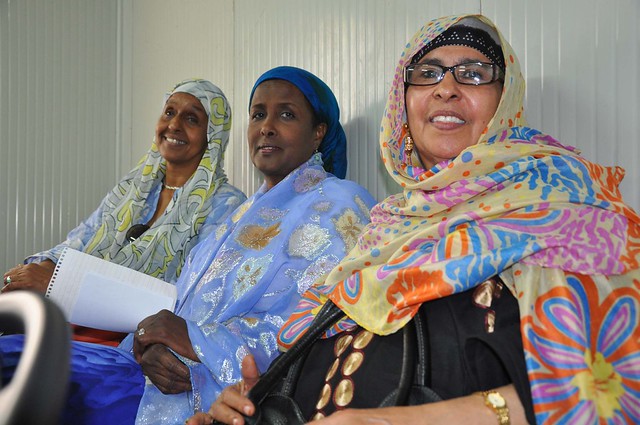 |
| Women meeting the Technical Selection Committee to ensure women are represented |
They didn't get their quota and since then, many presidential candidates including the current president included this issue as a priority into their campaign. I waited to see if any of these discussions and promises would bear fruit and, going by the street talk of Mogadishu in the last few days, the new cabinet, when announced, might be taking a key step into the forward movement of this debate in the form of a female foreign minister.
If this does become true it might be a cause for celebration but what lingers in the back of my mind is the fact that Somali women had always as far back as history depicts been part and parcel of Somali society, unlike our Arab and Western counterparts. They were highly active and held many key posts within government, including ministerial, as well as leading other areas and institutions of the Somali country and society. One of the fond memories I have as a child in Mogadishu is going with my mother to her university, whose department was led by a female professor.
And then when the civil war broke out, women took an even greater social responsibility upon their shoulders and became the backbone of society and initiators of survival. So I wonder when did this backward moving shift occur where women have now got to ask for inclusion, as if they're second
class citizens? Till this day most women are the breadwinners of their households and leaders of their communities but them advocating for a minority inclusion defeats the mountainous role they
always played.
It is a topical issue, one that can certainly not be concluded in a mere blog post but I just wanted to shed light into the need to properly examine and engage with somali women with regards to the roles they played, engage them on an equal platform as men and then look into developing their participation, rather than having minority quotas and the odd ministerial position allocated.
Uganda's threat shows the fragility of peace in Southern Somalia
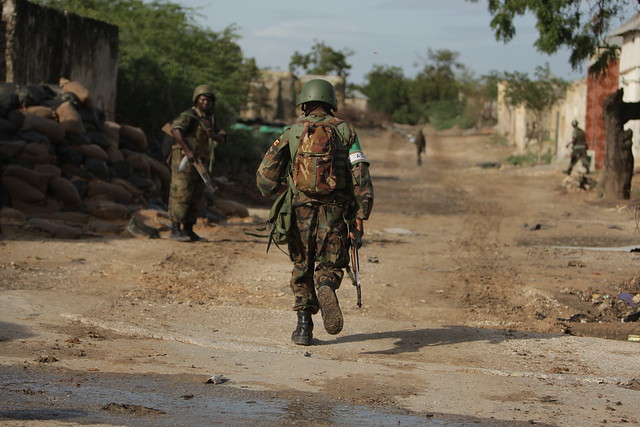 |
| Ugandan soldiers in Mogadishu from AU/UN flickr |
There has been relative peace in Mogadishu and other areas previously controlled by Al-Shabab. However, this peace is not due to the efforts of the Somali people but rather enforced by the presence of the African Union Mission in Somalia (AMISOM), primarily comprised of Ugandan troops.
Uganda now threatens to withdraw its troops from Somalia due to a UN report detailing its role in arming and supporting rebels in the Democratic Republic of Congo.
This threat worries the Somali government, which entirely relies on the AU peacekeepers for its existence, and the Somali population, who are beginning to believe that peace can return to southern Somalia.
Over the past year, AMISOM has forced Al-Shabab out of most major cities and towns they previously controlled. As a result, Al-Shabab is short on money and recruits, leading to relative peace in Somalia's capital Mogadishu. The peaceful political transition resulting in the creation of a new Somali parliament, the election of a president, and the appointment of a prime minister was made possible by the AU peacekeeping force.
Despite Ugandan President Yoweri Museveni's earlier speeches about his humanitarian intentions in Somalia and his desire for peace (which many doubted), his true motives are now exposed: he uses Somalia as a tool to avoid criticism of his authoritarian rule and his meddling in the DRC. However, it is unlikely that Museveni will actually withdraw his forces due to the UN report, as he benefits politically, militarily, and economically from this intervention.
But what if Ugandan troops leave Somalia prematurely? The consequences for peace in southern Somalia would be devastating. Al-Shabab would likely return to towns like Marka and Afgooye, and possibly even Mogadishu. This would significantly hinder the new government's ability to make any political progress.
The Somali army is largely comprised of militias who were unable to defeat Al-Shabab or maintain peace. Currently, most government soldiers are employed for routine security work at hotels or guarding NGOs and journalists around Mogadishu. Even when fighting alongside the AU peacekeepers, government soldiers often pose the greatest threat to the local population by robbing shops and homes and committing acts of rape.
Somalia's new president stated that creating an effective army is his top priority. However, two months into his term, he has not yet articulated a clear plan to achieve this goal (his predecessors made similar promises but failed). The biggest obstacle is political, as several critical issues need to be addressed before building a unified national army: the relationship between semi-independent regions and the central government, the treatment of warlords and militia leaders who committed major crimes against humanity but currently hold military ranks, and the level of centralization within the army (e.g., will Puntland's army be controlled from Mogadishu?). None of these issues have been addressed so far, meaning the Somali government will likely rely on AU peacekeepers for a long time to come.
Therefore, the most immediate response to the Ugandan threat should be increasing the diversity of troops in Somalia. One proposal, opposed by Uganda, Kenya, and Ethiopia, is to transition the mission from an African Union peacekeeping force to a United Nations force. This would allow more countries, including Muslim nations like Turkey, to contribute troops to Somalia. In the medium term, addressing the political obstacles hindering the creation of a national army is crucial, while simultaneously training a small, multi-regional force that excludes any warlords or militias.
Oct 25, 2012
A displaced Somali woman hopelessly sits in front of her makeshift hut hours after men in government uniform raped her in Mogadishu on October 25, 2012 photo by / Feisal Omar


|
A displaced Somali woman hopelessly sits in front of her makeshift
hours after men in government uniform raped her in Mogadishu on October 25,
2012 photo by / Feisal Omar
|
| Add caption |
Aug 28, 2012
Mogadishu chronicles
My longing to see the city I was born in which I harboured for many years, finally came into realisation on the 20th of July 2012. I went for an assignment to moderate the Somali draft constitution conference. Prior to this trip, last time I was in Mogadishu was in 1989 as a 6 year old. As my flight lowered on to the ground ready to land, I noticed the beautiful blue ocean, its waves flowing serenely onto the crisp white beaches. Right next to it, there is a sea of makeshift tents scattered across the city, filled with displaced people. I was about to come face to face with my birth city, a city torn forlornly by war.
I made my way into the airport and had to queue in the 'foreigners' line for immigration. I was a foreigner in my native soil. I had to buy a visa to enter my homeland. It was a bitter pill to swallow. On my way to the hotel, bullet holes and destroyed buildings decorated the streets. People built makeshift tents in the old government ministries which were now destroyed beyond recognition. Every moment or so fresh gunshots would sound in the faint distant. My city was a city of conflict.
The first few days at work were haphazard and chaotic. The conference was being held at the former police academy and countless security checkpoints were put in place. More than 800 people from across Somalia were assembled to approve the draft constitution and hundreds of staff were hired to facilitate the conference during the 9 days it would last.But given the lack of coordination between those working there, minute tasks became impossible to accomplish. Security personnel weren't adequately trained so they would search people in the most inappropriate ways. Additionally, senior dignitaries and government officials were present most days which made circumstances extremely volatile. Whilst there, a mortar attack aimed at where people go through security and two suicide bombings were carried out. The suicide bombings were particularly frightening as they occurred just outside of the building where the conference was being held. The explosion shook the entire building and part of the ceiling came off. A security guard got injured and another one died. We all hurriedly ran towards the door and as I walked outside, I saw bits and pieces of the limbs and other body parts of the suicide bombers, dispersed across the ground.
Back at the hotel, most evenings would be filled with similar anxiety. Mogadishu keeps you on your toes. Every night, I would hear a varying number of casualties that had been killed either by roadside bombs or targeted assassination. Leaving the hotel was unimaginable.The sound of gunshots in the night were so regular that eventually it became the background music of my city. Strangely, I got used to hearing them after some days but would still have the occasional flinch.
When the work was done, I had a few moments to drive through the city. I was lucky enough to see the ward of the hospital where I was born, Medina hospital. I also went to the beach and played with its sand, a rare moment of tranquility amid chaotic circumstances. The city was beloved to me, it still is but its heart had been pierced and shredded and it pained me. I felt like I was driving through a ghost city. Very few buildings were in tact and the people looked like they had been to hell and back.
I took a moment to mingle with the people and noticed despite living in a city ravaged by war and having lived through it, they were remarkably hopeful and ambitious. I met several youngsters who were eager to educate themselves doing degrees and diplomas consecutively whilst having a part time job. The local business people were full of creative ideas. The entrepreneurial spirit of the people was alive and thriving. It was then that it dawned on me that the people of Mogadishu had moved beyond fighting with one another. There was no sign of clan animosity. They were ready for peace and stability but their leaders weren't moving in the same speed...
The city gave me a good sent off on the day I was flying out. The guards at the security checkpoint at the entrance of the airport struggled to get people to form a line. Instead of telling them to queue up, they fired gunshots in the air whilst standing right next to us. This was clearly the main form of communication but I remain optimistic and hope the next time I am there, the language of humanity would be there to greet me.
I made my way into the airport and had to queue in the 'foreigners' line for immigration. I was a foreigner in my native soil. I had to buy a visa to enter my homeland. It was a bitter pill to swallow. On my way to the hotel, bullet holes and destroyed buildings decorated the streets. People built makeshift tents in the old government ministries which were now destroyed beyond recognition. Every moment or so fresh gunshots would sound in the faint distant. My city was a city of conflict.
The first few days at work were haphazard and chaotic. The conference was being held at the former police academy and countless security checkpoints were put in place. More than 800 people from across Somalia were assembled to approve the draft constitution and hundreds of staff were hired to facilitate the conference during the 9 days it would last.But given the lack of coordination between those working there, minute tasks became impossible to accomplish. Security personnel weren't adequately trained so they would search people in the most inappropriate ways. Additionally, senior dignitaries and government officials were present most days which made circumstances extremely volatile. Whilst there, a mortar attack aimed at where people go through security and two suicide bombings were carried out. The suicide bombings were particularly frightening as they occurred just outside of the building where the conference was being held. The explosion shook the entire building and part of the ceiling came off. A security guard got injured and another one died. We all hurriedly ran towards the door and as I walked outside, I saw bits and pieces of the limbs and other body parts of the suicide bombers, dispersed across the ground.
Back at the hotel, most evenings would be filled with similar anxiety. Mogadishu keeps you on your toes. Every night, I would hear a varying number of casualties that had been killed either by roadside bombs or targeted assassination. Leaving the hotel was unimaginable.The sound of gunshots in the night were so regular that eventually it became the background music of my city. Strangely, I got used to hearing them after some days but would still have the occasional flinch.
When the work was done, I had a few moments to drive through the city. I was lucky enough to see the ward of the hospital where I was born, Medina hospital. I also went to the beach and played with its sand, a rare moment of tranquility amid chaotic circumstances. The city was beloved to me, it still is but its heart had been pierced and shredded and it pained me. I felt like I was driving through a ghost city. Very few buildings were in tact and the people looked like they had been to hell and back.
I took a moment to mingle with the people and noticed despite living in a city ravaged by war and having lived through it, they were remarkably hopeful and ambitious. I met several youngsters who were eager to educate themselves doing degrees and diplomas consecutively whilst having a part time job. The local business people were full of creative ideas. The entrepreneurial spirit of the people was alive and thriving. It was then that it dawned on me that the people of Mogadishu had moved beyond fighting with one another. There was no sign of clan animosity. They were ready for peace and stability but their leaders weren't moving in the same speed...
The city gave me a good sent off on the day I was flying out. The guards at the security checkpoint at the entrance of the airport struggled to get people to form a line. Instead of telling them to queue up, they fired gunshots in the air whilst standing right next to us. This was clearly the main form of communication but I remain optimistic and hope the next time I am there, the language of humanity would be there to greet me.
Aug 5, 2012
Ramadan Re-awakening
Now more than
ever, as we drift even further into a gadget obsessed world of self-indulgence
and so called “first world problems”, Ramadan becomes even more important in
more ways than one. Let’s face it, the world is becoming an increasingly aggressive
place where people either believe more than ever or less than usual and those
in-between are referred to as hippies. Interestingly, a lot of agnostic people
have recently been more ‘awakened’ to New Age spirituality; traveling to hot-spot
countries like India and Nepal for guidance or resorting to eating just raw
food in order to connect with themselves and everything around. Those people
usually reject any formal notion of religion but still crave and have ‘woken
up’ to the notion that there is something greater than us. Essentially they
fast: cleansing themselves from all things artificial in order to purify
themselves. Let’s be honest, whether they choose to use the term ‘God’ or not,
they’re basically trying to connect to Him and whilst mainstream society
usually refers to them as ‘froufrou hippies’, they’re on the right path; they
just haven’t quite reached the goal yet. You see, it’s not very complicated or difficult - the first step to reawakening your true self is to let go of your self
completely. The only thing between you and God is you.
Islam has its
own, more rewarding, option of decleansing and detoxifying yourself. The holy
month of Ramadan (where Muslims abstain from food and beverage from dusk till
dawn) isn’t just about fasting in order to sympathise with those who are less
fortunate. Ramadan is a chance for you to disconnect from the bubble of
self-importance and selfishness in order to connect to others and ultimately a
higher being; God. Hunger is one of the most powerful feelings, when the pit of
your stomach feels hunger, you panic and will do nearly anything and eat
everything in order to make that instinctual feeling disappear. So many of us
munch our way trough Ramadan, going from meal to meal until the month is up and
you won’t have to experience that kind of hunger again for a year. As much as
Ramadan is about getting closer to God, it is also a continuous wake-up call to
remind us that for so many in this world, everyday is a fasting day whether
they like it or not. Yet, when I look at my grandmother and the way that she
used to eat in Somalia, although food was at times scarce, she grew up to
become a fertile woman with no issues of heart disease, diabetes, asthma or
obesity. Like so many of our grandparents and great-grandparents, although
their food options were limited, they ate a diet of fresh local vegetables,
pulses, and dairy and at special occasions meat, fish and poultry. My
grandmother still doesn’t quite understand what lactose intolerant (or any
other food allergies for that matter) mean. She doesn’t get what asthma is or
why some people are allergic to the trees and grass –“next time you’ll tell me
that someone is allergic to the sun as well”, she’d joke. Imagine her surprise.
Now so many of
us have unlimited options for food but the problem is that we’re not eating
food anymore, we’re eating food-like products that are adorned to look, taste
and smell amazing, moving further away from our grandparents' heavily plant and
pulse based diet. How many of our grandparents lived on processed food with
ingredients that are barely pronounceable not to mention with numbers? In our generation and for most parts of the world, we’re now basically overfed and ‘under-nourished’ and with the rush and stress of
everyday life, who can really say that they have time to think about food in a
meaningful way? Cue Ramadan.

Jul 18, 2012
Will the real Somali please stand up?
Before
my grandmother came to live with us when I was 7 years old, I had forgotten a
lot of my spoken Somali. We were still refugees in Sweden and I had just
started school, eager to keep up with the Swedish kids and my mother, who was
struggling to learn this new language, encouraged me to speak Swedish at home
so that we could both practise it with each other. At my pre-school, a year or
so earlier, it was obvious that I was learning Swedish at a faster pace than the
other refugee kids and so was placed in a Swedish kindergarten where I thrived
but at the cost of losing my Somali. Looking back now, I think the other
foreign children struggled to keep up because their parents were speaking their
native language to them, perhaps realising that we were at a key age where the
language you speak at home is the one you will grow up to speak fluently. But
then came my grandmother who had been in Kenya with my aunts during the two
years since we all fled from Somalia and it was immediately clear that she had
no intention of speaking anything but Somali and if I wanted to be a part of
our home life, I had to re-learn my mother’s tongue. You want to know the best
way to learn a language? Share a room with someone who can’t understand
anything else.
So
over the years I learned to not only speak proper Somali but ended up speaking
exactly like her; imitating her phrases and older generation words which, at
times, made me sound like an old lady in a child’s body. It became an unspoken
rule that we would all speak Somali at home at all times. Even though I had my
own room, I continued to share my grandmother’s and we became much closer than
I was to my mother. I think that whilst my mother was doing her best to balance
Swedish lessons and work (not to mention setting up charities for Somali women
and newer refugees), my grandmother and I remained in our own imagined Somali
bubble of folktale, stories and recollections of a lost life. She raised me on
stories of our people, our land; the entire nation captured in each hero and
villain. She was my Somalia.
As
I got older I started to realise that my cousins and peers hardly spoke Somali
and when I did, they looked at me as if I was weird for speaking a language
that only the adults did. I had cracked the code on how to understand the big
people. When
I was 8 or 9, a group of Somali girls around my age one day jumped out of
nowhere after school and started to beat me. I’ll never forget how one of them,
the elder, slapped me right across my face and said that I should stop pretending
to be Somali because I’m not due of my lighter skin tone and lack of hijab. There
was a rumour circulating that I was of mixed race, which apparently took away
from my claim of being Somali because I wasn’t ‘pure’ enough. Within a year or
two, I grew taller and bigger than all of them and made sure that no one ever
pushed me around after that but it really stuck for a long time how someone can
try to take your nationality away from you when you don’t tick all their boxes. Are
you the right shade of black? Do you speak Somali fluently? Are you veiled? What’s
your tribe? Are you enough of yourself?
Those
of us born in the 80’s of Somali origin are now a part of a generation uprooted
and scattered, a worldwide diaspora of a people either trying hard to shove
their identity down or emphasise it in misguided ways by trying to take it away
from others. As a generation with either very little or no memory of Somalia - what will we pass on to our children or each other when our parents pass away? One
of my post-colonial heroes Frantz Fanon once said that to speak a language is
to take on a world, a culture and I think that rings most true to the millions
of refugees around the world who will never be able to return to their country.
So how do you keep Somalia alive? Share her by embracing the fact that all of
us can claim her, love her and have the right to be with her and deserve her. Talk to
her, talk with her and talk about her in her own tongue and you might end up keeping the best part of yourself alive in the process.

Jul 10, 2012
A voyage home - part 2
They say that your first memory is usually not with your mother and that childhood amnesia makes it hard for most adults to recollect even the happiest moments under the age of 4. The few lucky ones that can actually remember a real event will usually recall one that does not include their mother. My first memory is of being around 2, maybe 2 and a-half years old outdoors in Mogadishu (or as we call it, Xamar) with my two aunts. I’m sucking on a round sweet, almost the size of a lollipop, it may be much smaller but I remember how it feels large in my mouth. I’m wearing a yellow dress. It’s hot outside. I’m happy. All of a sudden I swallow the sweet by accident (maybe I meant to do it) and begin to choke. My aunts are frantic, running towards me, voices are raised, people talking simultaneously and then it goes black. I remember the panic of choking and the realisation that I had done something bad. The first time I told this to one of my aunts (the older one), we were sitting in her apartment in Cairo in 2005. We were finally reunited since the war and she was showing me things that she had managed to take from our house in Xamar. My grandfather's gold clock, pictures and my tiny jeans skirt from when I was just a baby. At first she went quiet as if she felt guilty that she wasn’t able to immediately validate my memory. Then her eyes widen and she laughs that wild laughter, the one that always feels like it resonates from the pit of her belly: “how could I forget! We had just taken you for a ride in your uncle’s new Jeep and you were crying but sweets always made you happy...” and then I get that familiar look again, the one where she tilts her head to the side in disbelief and says “how could you have remembered that?”
Until that moment, I was convinced that it wasn’t a real memory; perhaps something I had conjured up in a dream or willed myself to believe had happened because it felt so real. After that day, I felt as though a door had been opened, someone who raised me had validated a memory and I was now free to explore the vivid scenarios in my mind with people who were there and whose own memory was far more developed and intact. Our brain is such a magnificent and complex entity that protects us when we need it (without knowing that we need it) and helps us shine brightly when we try so it’s not a surprise to me that I can remember events, places and people, scents and sounds from the age of 2 onwards more than I can remember details from when I was 8 or 9. It’s as though the process of growing up and old is a contious filing and organising of memories; pushing irrelevant ones deeper in cabinets and polishing the best ones for retrieval at any given time. In a way, we are all storytellers.
Stepping off that plane in Somalia with my uncomfortable abaya and converse shoes was a stark contrast from walking across to the Kenyan border with a broken sandal 20 years earlier. In front of the sun and sky, in the middle of the day, I was now calmly entering a land that I was rushed out of at night. I’m not sure what I was expecting - the sky to open up and great me with a thousand sunrays or to step back in time, find myself in my four year old body and realise that everything else had just been a dream; a twenty year long nap that now was awakened. My mother, who sees me standing frozen at the bottom of the plane’s steps, drags me inside to the airport as we wait for our bags. It’s business as usual for her (who came once before me a few months earlier) and the others rushing around, shuffling to grab their belongings. I suppose I thought we would all fall to our knees, kneeling at the same time and grabbing the earth until our fingernails are full of familiar dirt.
I wish that I could have shared that feeling with every restless refugee in the world - the soothing breeze that flows through even the toughest of hearts when you reach the place where understanding and being understood meet. Home. Home like faces decorated to look just like yours. Home like canjeero flavoured kisses, hugs of goat milk and fresh fish. Home like the air thick with oud and myrrh, clouding tales of near-deaths and broken hearts. Someone is finally coming back after years of exile; someone else is meeting their grandparent for the first time. I, with my new shoes and choked tears, am creating room to house new memories.

Jul 2, 2012
A voyage home
As the Somali Independence Day yesterday marked 52 years of independence, I started thinking about what that meant and how it feels to celebrate victory and hope so far from home at a time when it feels as though there is little to rejoice. It may only have been half a century since the Italians and the British left but we've certainly been roaming for hundreds of years in the land we came to know and love as Soomaaliya.
The last time I was on Somali soil, I was four and a half years old, making my way to the Kenyan border, literally by foot (or sandal) for a part of the way. It was 1990 and by then the civil war in Somalia had already taken the lives of numerous family members and distant relatives. At that age, I had very little concept of war but I was already well aware of the sound of a weapon when it is being charged or in full use or what a body blown away to pieces looks like on the ground next to you. It was almost a decade later, at around age thirteen, that I started to recollect (or rather make myself recollect) my earliest childhood memories and talk about them to my family as an elimination process of some sort in order to know what was real and what was just anxiety filled visions and dreams. I’ll always remember the look of surprise on my mother’s face when I told her that I remembered our bright red front door, certain people who worked in the household and even the neighbourhood; the mosque up the hill and the shops down the street. Memory is a curious thing, for every little thing that you hold on to, you eventually feel as though you have to let something else go. The few precious memories that I have from my early childhood (aged 2 onwards) are still in parts vivid to me, a warm comfort that I turn to in my time of need (and who doesn’t need warm comfort every chance they get?) So there I was, 24 years young in 2010, finally traveling to that place I had evoked in arguments and in passion that was now something tangible to me, something real, something I would soon be able to smell, touch, feel. Those who have experienced forced migration know all too well that lingering feeling of restlessness that never quite goes away.
Boarding that plane home I see so many faces that resemble mine. What an overwhelming feeling to be able to eavesdrop into every conversation around me, to be spoilt with common and rare dialects as if listening to a symphony on the radio. They're all trying to outdo each other's high notes. I board that first plane tired and sleepy, having hardly closed my eyes long enough to dream the following night. It's dawn and the sun comes up as we board but inside that airport tunnel, it's hard to know if it is day or night. The plane is full and I sit in the middle (I wanted to sit by the window) but instead there is an older woman sat there and who seems determined not to move. Her voice is particularly quiet for a Somali and it is as if her feeble frame matches that of her enervated voice. I lean in several times to listen closely to her replies - yes she wants water as well, no I don't have to move my arm from the shared armrest.
Up in the clouds, I don't know what to expect, what it'll look like from up here. Will it be green and fruitful or a mirror image of the desert I left behind? Will I be able to recognise it? Will it be able to recognise me? Flying over the Yemeni desert, I realise how ironic it is that I feel so far and yet so close to home. All the notions I ever had about home suddenly flash before me in a surprisingly overwhelming way as if lined up to be judged, mocked, cast aside. I've always considered home, conventionally, where my mother is, as if the world and its continents revolve around her bosom. But now I'm on my way to the real home, the one I didn't have to play nice to get invited to, the one where I can kiss the ground upon landing and greet like a long lost cousin.
As the plane starts to descend, the ocean stretches so wide before me, a deep blue with shades of turquoise that seems to flow into eternity takes my breath away. This is it. This is the land that my mother has so desperately attempted to recreate in our home for decades, the land that was cursed in anger and cried for in despair, the mythical land used in late night stories and shoved deep in every suitcase. The land tormented on the television and conjured up in schoolyard fights, the land my grandmother made me fall in love with as an adult and whose memories I have of as a child I sacrificed many others to retain. You are so beautiful and I'm sorry that it took me this long to say and see that.

Subscribe to:
Posts (Atom)