Sep 30, 2006

Ramadan, A Week is Gone

A weeks has already passed in Ramadan, I was planning to post on Ramadan but my schedule was completely turned upside down. Muslims eagerly anticipate the coming of the month of Ramadan but first what isRamadan, BreatheIslam writes:

Ramadan is the 9th month of the Islamic calendar and during this month Muslims abstain from food, drink, smoking and marital sex during daylight hours (from the break of dawn until sunset). When asked by Non Muslims as to why we fast during Ramadan, remember when responding that the primary reason is that it has been declared Fardh (obligatory) upon every adult, sane and healthy Muslim and is a form of worship. Fasting in Ramadan is one of the 5 pillars of Islam. All other reasons such as it teaches us patience, empathy for the hungry etc are secondary.

The month of Ramadan is even more so blessed for the Muslims as it was in this month the Holy Qur’an was revealed. Our scholars and teachers have already started telling us of the virtues and blessings of Ramadan and how the Prophet Muhammad (sallallahu alaihi wasallam) used to await and prepare for the coming of Ramadan. Rasulullah (Sallallahu Alaihi Wasallam) used to so eagerly await the arrival of the month of Ramadhãn that from the time the moon of Rajab was sighted he would make the following Duã:
“O Allah, Bless us in the month of Rajab and Sha’ban and cause us to reach Ramadhan.”

This month represents an amazing opportunity for Muslims to cleanse themselves and seek forgiveness from Allah and to reconcile all their differences. In short Muslims should strive to do good deeds of prayer, charity and family reunion and do less of the evil - and useless - deeds. Ramdan is not only about not eating and drinking, the Prophet (pbuh) said - the meaning - that some unfortunate fasters will only have hunger and thrist in their fasting; that shouldn't be the case. It's also an opportunity to turn-around your life and refocus on what's important in this life and the life after.

Throughout the history of Islam, Muslim had decisive victories during Ramadan as noted in Global Security :
There were a number significant battles during the month of Ramadan in which Allah granted victory to Islam and Muslims. "The great battle of Badr, which took place in the month of Ramadan, was the first battle between believers and infidels. The Muslims demonstrated rare heroism, setting their souls on the points of their lances and preferring martyrdom to remaining alive. Allah gave them a mighty victory for Islam. In The Battle of the Ditch, the Muslims trained for this battle [during Ramadan], even though it [actually] occurred in the month of Shawal, which comes after Ramadan. The conquest of Mecca in the battle of Badr, where the Prophet Mohammed fought against the infidels, took place on 17 Ramadan, 624 AD. The battle of Tabouk, also took place in the month of Ramadan. In this battle the soldiers of Islam, under the leadership of the Messenger of Allah, established in Tabouk a training and fighting camp during the month of fasting, so as to show the strength of the Muslims in the clash with the Byzantine army. The Muslims conquered Rhodes during the month of Ramadan. During the month of Ramadan a great Muslim victory was won over the Crusaders under the leadership of Salah Al-Din [Saladin] Al-Ayubi. His advisors counseled him to rest from the Jihad during the month of fasting, but Saladin insisted on continuing the Jihad during Ramadan.
Ramadan Calendar:
First Day : 10/15/2004 Last Day : 11/12/2004
First Day : 10/04/2005 Last Day : 11/02/2005
First Day : 09/23/2006 Last Day : 10/22/2006
First Day : 09/12/2007 Last Day : 10/11/2007

Technocrati Tags: Islam

AlQaeda allegations in Somalia

FP blog had a post discussing the credibility of the Somali Prime Minister's allegations that UIC are "Al-Qaeda", certainly one of the most sensible analysis of the subject. Somali factions routinely accuse each other of terrorism and whatever else they can throw around to get outside support. Here's an excerpt from the FP Blog :
Is al-Qaeda on the march in Somalia? According to Somali interim PM Ali Mohamed Gedi, it is. After Islamic militias captured the southern town of Kismayo, on Sunday, Gedi cried out for international help:

I would appeal to the governments of the region to join our efforts and protect the region from the expansion of this al-Qaeda network, these terrorists."

What makes this characterization completely disingenuous is that Gedi was among those who celebrated the take over of Mogadishu by the Islamists a few months back. This is Prime Minister Ghendi in a June interview with Radio France Internationale:

It was an excellent step forward... because [the previous secular warlord leaders] were not ready for a government, they were not ready for peace."

So, why the flip-flop? As it turns out, Mr. Ghendi fears that the Islamists may be positioning themselves for an attack on Baidoa, the seat of his transitional government. The al-Qaeda allegation is meant to provide justification for the involvement of Ethiopian troops that are reportedly inside the country.

Gregory H. Winger, in a recent Christian Science Monitor op-ed, points out that part of the reason why Ethiopians are eager to defend the transitional government against the Islamists is to gain international aid - because they'll be seen as partners in the war on terror. It's just more evidence that anytime someone wants to get the United States' attention, you'll hear the al-Qaeda connection invoked.
Ethiopia is not making it a secret that it doesn't really want a united Somali government. It's the only country to recognize Somaliland, support Puntland and claim to support the Transitional Somali government as well as the warlords ousted by the UIC. If Puntland declares independence like Somaliland you can be sure Ethiopia will recognize it too. The previous Somali government repeatedly accused Ethiopia of interference in Somalia.

Technocrati Tags: Somalia, Africa

Sep 26, 2006

PostGlobal, Discussion on Darfur

Another question was posted on PostGlobla few days regarding Darfur, here is the question and my rather lengthy response:
Topic: The UN recently authorized a peacekeeping force to Darfur but the Sudanese government, led by President Omar al-Bashir, is not allowing it in. The Arab League and others are bolstering the Sudanese regime, forming a regional political bloc which refuses to admit the UN force.
Question: Should regional solidarity be allowed to trump human rights needs? What could be done to pull away support from the Sudanese regime and enable UN troops to enter?

The Arab League is a weak, incompetent and morally bankrupt organization that doesn't represent the views of the Arab people. This was demonstrated repeatedly but more recently in Israeli’s destruction of Lebanon and in Darfur . You can broadly divide Arab countries into stateless/occupied countries and those run by dictators/absolute monarchs, the latter group having the full support of the United States. The stateless/occupied group such as Lebanon, Palestine and Somalia have enough problems to deal with. The second group (with authoritarian rulers) can't open the door for such "dangerous" ideas like human rights; most of these regimes are reported for major human rights violations on a yearly basis. Besides they can’t take the moral high ground when talking to Sudan, they’re all in it together.

In fairness though, the Arab League is not the only ones to give human rights a back seat. East Asian countries have been criticized for not pointing out the human rights abuses in Burma and the US has always overlooked (and defends) human rights abuses by Israel (the latest being in Lebanon).

The West isn’t entirely honest in its motives, it seem they only act on human rights issues if and when their interest is affected. Next door to Sudan is Uganda were the Acholi people have been facing genocide for the last 10 years from the Lord's Resistance Army on one side and the government’s concentration camps on the other (an issue repeatedly raised by people like Olara Otunnu ) but it seems the Sudanese oil and resource is at least part of the motive to act on Darfur .

The African Union (AU) on the hand played a positive role, I felt optimistic for the future of this organization. It seems Africa has finally recognized that conflicts more than anything else is the cause of the poverty and backwardness in Africa. The organization should continue to point out and intervene in conflicts and human rights abuses quicker. However the deployment of the African troops in Darfur showed the AU’s short comings in the lack of experience and - more importantly - funds.

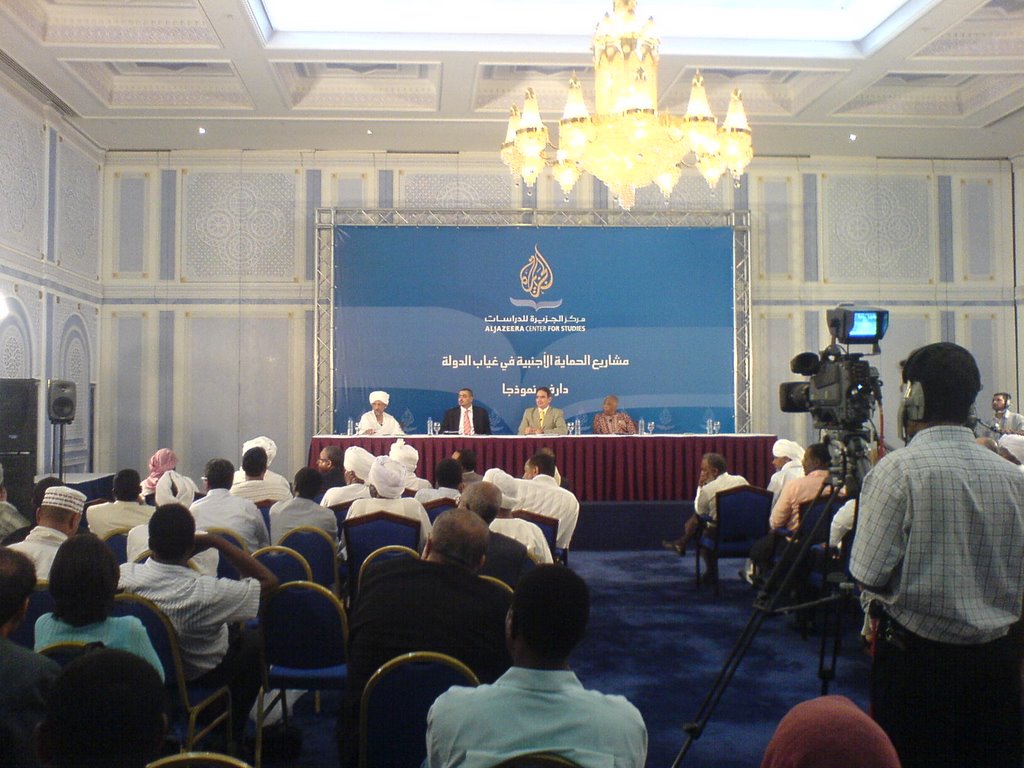
Early this month I attended a discussion on Darfur in Aljazeera Center for Studies . You could see that many Arabs (and intellectuals at that) are unfortunately in denial and often confuse their suspicion of the United State’s motives with the continuing suffering of the people of Darfur. I was infuriated to hear some talk about useless conspiracy theories without a single condemnation of what the Sudanese government is doing there. At the end of the session I spoke to a man from Darfur who spoke earlier and I asked him if he can give me a prove of the government's support for the Janjaweed . He said that the Arabs (of whom the Janjaweed belong) and the people of Darfur lived along side for centuries and they frequently fought and then reconciled, but now the Darfur people can no longer defend themselves against the Janjaweed only because the government's support for them. I also got a taste of the deep rooted racism in the Sudanese society when I saw the Sudanese (Northerners and Darfurians) referring to each other as "Arabs" and "Zurq" (literally meaning blue in Arabic but used to refer to a black person). The Arabs overwhelmingly supported the government’s refusal of foreign troops while the Darfurians were all for foreign troops.

I feel nothing but contempt for the Sudanese government for its incompetence and racism. How could a government take part in killing and displacing its own people to the extent where the rest of the world has to come in and do its job and how could such a government be allowed to rule over people it’s intent on killing and driving out. I also blame the Sudanese people for being in denial of the genocide in Darfur. A case can be made for people being misinformed but that’s not a good enough excuse when the government is doing this in their name.

Many people don’t know much about the proud history and heritage of the people of Darfur, the fact that it was one of the strongest kingdoms in region for centuries. It’s a disgrace that the world has allowed this genocide and continues. The Acholi people in Uganda are also systematically being rooted out by the government and the rebels, let us not forget them too.

Technocrati Tags: ,


The UIC Captures Kismayo, then What?

Many people thought the UIC will be different from existing tribal factions in Somalia since Islam is the one thing that can unite Somalis. However, the UIC which is mainly of Hawiye tribe was suspected by many Somalis to be just another tribal faction. However, no can denying the positive change in Mogadishu of stablity and peace the UIC have managed. Recently in an interview with the BBC Somali the leader of UIC endorsed a warlord nick named Indo Adde and insisted his areas were peaceful when it wasn’t, so others interpreted this move as simply clan allegiance. But their recent capture of Kismayo shattered any doubts that they’re just another tribal faction with an Islamic theme.

Kismayo is one of the most fought over cities in
Somalia because of its port and strategic position. In the height of the civil ward in early 1990S, Darod clan was based in Kismayo while Hawiye controlled Mogadishu. Since then allegiances changed and finally few years ago it fell to a coalition of Marehan (Darod) and Habar Gidir (Hawiye) militias. Then more recently the Marehan warlord (Barre Hiraale) took control over the city who opposed the UIC and supported the government (later appointed Defense Minister!). Though the UIC commander who captured Kismayo now is of the Ogaden tribe (Darod) it's seen it’s seen by those who lost the city as Hawiye taking over the city.

There're strong indications that the capture of Kismayo will be followed by more fighting in the next few days/weeks. The warlord who controlled the city was an ally to the Transitional Government, he withdrew his troops without fighting which means he is planning an assault on the city soon. The Transitional Government is afraid their base Baidao is next on the UIC’s list. Just today the Prime Minister accused the UIC of being Al Qaeda (which loads of rubbish) and called for the international community and regional government to help them fight the UIC. There're reports that hundreds of Ethiopian troops have crossed the border to Baidao and are arming the government and warlords loyal to it in preparation for an assault on Kismayo or Mogadishu. It seems within the next few days either the UIC will advance into Baidao or the warlords, government and Ethiopia combined will attack first.

Technocrati Tags: Somalia, Africa


Sep 21, 2006

Talks between the US and UIC in Somalia

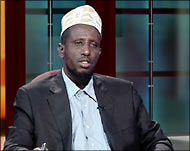
In a TV interview with Aljazeera, the head of executive council Sharif Ahmed said the UIC has been indirectly talking to the US through a third party, he didn't mention who the third party is. He said the aim of the talks was to ensure that there is no foreign intervention in Somalia particularly from the US. It's not clear who're they talking to from the US and I don't think the stated aim of the talks from the point view of the UIC is the same for US. I'm not sure if the US is having similar communication with the Transitional Government as well, I would be surprised if they aren’t. But it seems so far, the US is unwilling to work with the Somalis (all of them) to create a central government. The US support for all the previous attempts to setup a central government in Somalia was useless at best. The EU has been a little more active in this regard and supported fully the last process in which the current Transitional Government was created.

Sharif Ahmed renewed the UIC's accusation of Ethiopia for the failed assassination attempt of the President of the Transitional Government Abdulla Yusuf.

Links: who is supporting who?

Technocrati Tags: Somalia, Africa

The Coup In Thailand

I was surprised when I read about the coup in Thailand, I thought it was a functioning democracy. Jim Moore's free world politics and policy has a local account of the coup:
About ten-thirty last night, just as I was getting in bed, a friend called and told me to turn on CNN. Sure enough, there were pictures of tanks outside the parliamentary buildings, a part of town not close to where I am but not exactly far, either. The distance between City Hall and Columbia University in Manhattan.

Because it was already nighttime in Bangkok, nothing seemed particularly different or strange. It was only when CNN and the BBC suddenly cut out that things began to feel a little weird. At some point in the middle of the night, the electricity went off.

This morning I got up as usual and went to yoga. The streets were quiet, which is not so strange since it was 6:45am, but the studio was locked. A few of the other students and I loitered in the lobby. Schools, banks, and most offices are closed today. One of the other students had seen tanks on her way to class.

Eventually the teacher showed up and, even though none of the other staff was there, smuggled us in the back way, which I guess means we launched our own coup of the yoga studio.

By the time we finished practicing this morning, the streets were still empty -- the intersection at Chitlom, which I usually have to take my life in my hands to cross, was so deserted I stood in the middle of the road for a few seconds just to savor the experience. At 9am the rush hour Sky Train was virtually empty, and people were quiet and looked glum.

Mostly it feels like a snow day: I'm home again in my pajamas, drinking tea and keeping an eye on the news online. Even the weather is unusual -- cool and raining. I live in a very ex-patty neighborhood, flanked by shopping malls, so I can't imagine that I would feel threatened unless the army tried to take over the Emporium Department Store. As far as I know, the shoe sale is still on, and good news -- the dollar is strong against the baht!

As for the political situation, it's still hard to know what's going on. Thaksin has been politically under siege for months, but there hasn't been a sense of violence or abject power grabbing. Well, maybe a little -- there was a staged attempt on Thaksin's life a few weeks ago, but even that seemed more like political theater than an actual threat.

I know that "coup d'etat" sounds dramatic and makes Thailand appear a banana republic (or, as my political scientist friend calls Thailand, a banana monarchy), but in fact Bangkok is a very firt-world city, and this coup seemingly a very white-collar maneuver. Sure, it's no surprise that a lot of the politicians are corrupt, and that there's dissent in the ranks, but the issues have been playing out more on the stock exchange and Op-Ed page than the streets -- that the military has taken control seems a bizarre response to the situation. It would be as if Enron middle-management had staged a coup.

The wild card, of course, is the king. The general who's taken over doesn't really want to retain power for himself and has declared his allegience to the king; even the tanks circling Government House are wearing yellow ribbons, the symbol of the monarchy.

But, the king isn't a substitute for a prime minister, and he isn't a replacement for Thaksin. A few months ago, when the dubiously-called elections were found to be dubiously-monitored and Thaksin the dubious winner, some of the opposition asked the king to intervene and appoint a prime minister. The king went on national television and scolded them: this is a democracy, he said, and a democracy holds elections. (To that point, Thaksin has been legitimately elected twice by an overwhelming majority.)

It seems to me with this coup that the general is now forcing the king's hand, making him intervene and perhaps appoint someone else. Or, declare his support for Thaksin, which may be in the best interest of democracy but does not seem to be in keeping with the king's personal taste.
Since the King has endorsed the coup and appointed the leader of the coup as the head of a new executive body. The coup leaders promised to appoint a new prime minister within two weeks. The people of Bangkok largely seem to have welcomed the coup.

Technocrati Tags: Asia

Sep 20, 2006

What modernity are we talking about?

I often hear some thinkers/intellectuals – often American - talking about "bringing modernity" to Muslims, for example David Kaiser says in his blog that "The Muslim world needs to move towards modernity, but our attempts to force it to do so are having the opposite effect". The same point was made in a discussion titled In Support of Arab Democracy by Steven A. Cook, Douglas Dillon Fellow from CFR(the whole discussion merits a separate post).

Modernity is the act of being modern and using modern tools and technologies, so my question is what modernity doesn’t the Muslim world have? Are we actually talking about the same thing? I think they’re mixing between Modernization and Westernization, as Samuel Huntington points out in his book Clash of Civilizations that these two things are different, societies can be modern in using and developing all sorts of modern tools and technologies while completely or partially rejecting Westernization. And there're plenty of examples both from the Muslim world and elsewhere; Egypt, Malaysia, China and Japan are all modern but are decisively not Western. When Yitzhak Nakash, was asked about this issue, he proceeded to explain that it was naïve to think that Muslim countries were not modern and pointed out that even Al-Qaeda is remarkably modern in using modern tools and technologies such as the Internet and airplanes to further their aims.

I don't exactly know why apparently smart people still talk about modernizing Muslim, is it just a slip of the tongue? Do they actually think that in the Muslims people are still riding camels and don’t have electricity or running water? or is it unwillingness to admit that these societies are modern until they're fully westernized?

Technocrati Tags: Islam

Suicide Bombing and Ethiopia's Interest in Somalia

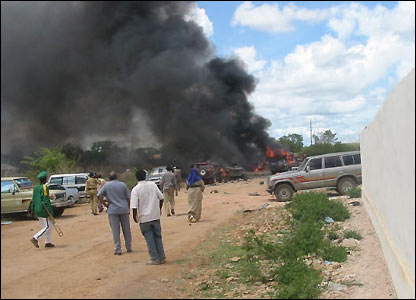
It wasn't surprising that Abdullah Yusuf, the President of the Transitional Government in Somalia was the target of an assassination attempt. In 1982, he led the first armed opposition in Somalia and has been a close ally to Ethiopia ever since (to the distaste of most Somalis), the he became a warlord during the civil war and retained control. So he isn't, by any definition, a man of peace and of course he had created many enemies for himself over the years in Puntland and southern Somalia.

What was surprising and scary was the method used, suicide bomb. In the Somali civil war, all kinds of horrible things has happened but never bombing let alone suicide bombing. Suicide is not known in Somalia, in fact the Somali language doesn't have a word for suicide. We may never know for sure who did it, I personally don't think it's done by Somalis. I don't think a Somali would commit suicide, let alone for an almost 80 year old warlord. I don't think it's the UIC either, if you know Somalia then you would know these guys are mainly businessmen and already control much of the south, they've no incentive to kill Abdullah Yusuf. So far they don't seem to have the desire to kill anyone, they let the warlords go and give them all an amnesty.

Somali people are eager for an end to the conflict and a functioning government and that's why the country is largely peaceful (from Galkayo upwards). The grassroots support for the UIC in the areas they control shows that people have had enough. But the recent decision by the AU to send IGAD troops to Somalia threatens to complicate things and endanger the relative peace the country has been enjoying. Ethiopia sees its interest in a fragmented and feudal Somalia. They're afraid any future Somali government will challenge Ethiopia's occupation of Ogaden and there free usage of Berbera port and that's why they're the only country to recognize Somaliland. It will be a disaster if Ethiopian troops are sent to Somalia; it will not be seen as peacekeeping, it will be seen as an invasion.

Technocrati Tags: Somalia, Africa

Sep 17, 2006

Muslim Public Opinion Grows in Strength

The Muslim response to the Pope’s - anti-Islamic - remarks was swift unlike the Danish cartoons. There were demonstrations around the Muslims world and Muslim leaders quickly seized the opportunity to take a popular position. Muslim media have also responded strongly to the remarks.

The Muslim reaction (public, media and leadership) highlights a deeper change in public action in the Muslim world. The public are increasing believing in their ability to bring about change and force their governments to act – i.e. Danish cartoons. This public action is already being used for domestic issues such as the Egyptian election. Muslim media - particularly in the Mid East - is giving the public a chance to be heard by their governments and the rest of the world which is increasingly forcing governments to do something. The media pressure and the serious internal problems in many Muslim countries - corruption, unemployment and lack of freedom – is forcing Muslim leaders to act quickly. In the recent Israel-Lebanon war Arab leaders were slow to respond – and blamed Hezbollah - but then they quickly changed their positions and condemned and rallied for ceasefire – only because of the growing domestic anger of their inaction.

Muslim leaders quickly responded to the Pope’s remarks in fear of missing out. This isn't such a big issue and it was somewhat diffused by the Pope’s “apology” – if we can call it that. But there might be bigger issues in the future – similar to the recent Lebanon war – where Arab leaders can do very little and the media continues to empower the public to speak out.

Update: Abuaardvark has a post on the fast response in Arab world and has a long post on the danish cartoons.

Note: the cartoon is from Emad Hajjaj, a famous Jordanian cartoonist.

Technocrati Tags: Public Opinion, Islam

Sep 16, 2006

The Pope Makes Anti-Islam Remarks

It became fashionable to insult muslims and Islam nowadays, and now it’s the Pope’s turn. Muslims around the world were shocked by the Popes remarks but I wasn't surprised that he felt this way, when Islam is the fastest growing religion in the West - despite the negative publicity – and Catholics faithfuls are converting to other denominations and religions.

Pope Urban II rallied Christians for the first crusade which resulted in killing hundreds of thousands of Muslims and Jews in Jerusalem. But when Saladdin took Jerusalem back, not a single Christian was hurt and they were able to stay or leave with their wealth and worship as they wished.

Update: the pope has given what seemed like an apology in a written statement read by a Vatican official. It's not yet confirmed whether he will go ahead with his planned visit to Turky in November.

Technocrati Tags: ,

Sep 15, 2006

African Troops and Corporate Bust in Somalia

The African Union approved a peacekeeping mission to Somalia to be deployed end of this month, and for the force to come from IGAD (Somalia’s neighbors).

The AU’s decision contradicts the - already pointless - agreement between the Transitional Government and UIC in Sudan which avoided discussion on anything important and agreed on all the things that didn’t really matter. While peacekeeping troops can help in southern Somalia, having these troops from the neighbors is bound to create new set of problems. Neighboring countries have their own agenda and that’s true pretty much everywhere, Afghanis for example refused any regional troops. The UIC is still opposes any foreign troops. The Somalis (just like the Afghans) don’t want troops from their neighbors. Ethiopia is a whole different category, one point most Somalis agree on is that there can be no Ethiopian troops in Somalia. It will be a disaster if Ethiopian troops set foot in Somalia, instead of bringing peace the conflict might even widen to include Ogaden.

On another note, Dalsan, a Somali wire-transfer business went bust few months ago, this a first in Somali business. It was primarily owned by two men but sold shares to hundreds of Somalis in Africa, US, Europe and Australia. Apparently, the operating funds of the business disappeared because of a dispute between the two owners. Because Somali business is mostly based on trust and involves no formal contracts, there little investors can do. I’ll update you on this later.

Technocrati Tags: ,

Sep 5, 2006

Discussion on Darfur at Aljazeera Center for Studies


Darfur is one of the saddest cases of our time, it highlights the failure of the world to protect the basic human rights of the people of western Sudan. But it also shows how incompetent and malicious governments can get, the Sudanese government could protect it’s people and even worse took sides (based on ethnicity). The African Union’s interference was a testament that Africa will be more conscious but it also showed it’s limitations in funds, experience and training. the world has agreed to send a UN force, but the Sudanese government is refusing.

Aljazeera Center for Studies hosted a panel to discuss this issue, the topic was “International Protection Programs in the Absence of a government – Darfur Case”. The panelists were Dr. Ghazi Salahaddin (from the Sudanese government), Dr. Abdulla Al-Ashal, Dr. Ibrahim Al-Jazi and Dr. Ahmed Diyab, the discussion was in Arab and aired on Aljazeera Live.

The discussion centered around the latest security council resolution 1706 and the Sudanese government’s refusal of foreign peacekeeping. After the panel discussion, the public were given the chance to comment or ask questions. Most of the attendees were from northern Sudanese (Arabs) and few from Darfur. Arab Sudanese acknowledged the suffering of the people of Darfur but mostly supported the government in its refusal to accept UN troops. The talked about US conspiracy to control Sudan (and its Oil) but none had condemned the Sudanese government role in misery of the people of Darfur, this could be said for some of those on the panel. On the other hand, Sudanese from Darfur (two spoke) fully supported foreign intervention, and their argument was that there’s no other solution – the Sudanese government was part of the problem.

Dr. Ghazi spoke well but the others either opposed mildly or derailed into conspiracy theories, there was no heated debate – the kind you usually get on Aljazeera.

A man from Darfur spoke eloquently by first referring to a famous battle against the British in the 19th century – and it has entered Sudanese history - were 18,000 Sudanese were killed and he compared it with the 400,000 killed and 2 million refugees in Darfur today. He talked about the burning of 3,000 villages and how his elderly parents have had to flee and can’t go back, he – understandably - supported foreign intervention as the only solution.

I personally feel nothing but contempt for the Sudanese government. How could a government discriminate against its own people, and take sides to the extent where hundreds of thousands of innocent people are killed, thousands of villages burnt and millions become homeless and refugees. How could these people be denied there basic human rights by the same government that was suppose to protect them. How could such a government speak of sovereignty and refuse foreign intervention when it’s part of the problem. How could any government wait so long until the rest of the world has to send troops to do their job. I think the Sudanese government should be held responsible for its actions.

Dr. Mostafa Sawagh, the director of the Center was - as always - patient and skillful in steering the conversation.

Technocrati Tags: , ,