Aug 29, 2006

Thriving Somali Business and the Need for Government

Thriving Somali Business and the Need for Government

There has been ongoing discussion—and debate—about Somalia's economy in the absence of a central government. Some studies argue that Somalia’s economy has actually improved since the fall of Siad Barre’s regime, primarily because of the absence of a predatory state. But what does this mean? Does it suggest that Somalia doesn’t need a government? And if it does, what kind of government would work?

Road to Anarchy

Somalia has been without a central government since Siad Barre was overthrown in 1990. In the northwest and northeast, regional governments—Somaliland and Puntland—have been established. However, the southern regions of Somalia, particularly south of Galkayo, lacked a central authority for 15 years, with warlords and tribal chiefs filling the vacuum. Recently, the Islamic Courts Union gained control over much of Southern Somalia, ousting the warlords.

The international community has made numerous attempts to establish a central government in Somalia, but these efforts have repeatedly failed. The current government remains weak and appears to be following in the footsteps of its predecessors.

Better Off Stateless?

Some argue that Somalis are better off without a government. In his paper “Better off Stateless,” Peter T. Leeson attributes Somalia’s improved economic situation to the absence of a predatory state, which had stifled entrepreneurship for decades. Somalia’s economy today thrives on private business and ownership.

Researchers Tatiana Nenova and Tim Harford explore this in their study, “Anarchy and Invention,” noting how Somali entrepreneurs have creatively used “foreign jurisdictions or institutions” to manage certain tasks. For example, hawala businesses—Somalia’s informal money transfer system—are registered in Dubai. Somali businesses rely on networks of trust, often rooted in the tribal system, to secure property rights and enforce agreements.

The Role of Hawala

The hawala system is perhaps the most critical sector in Somalia’s economy. Originating in the 1980s as a response to government restrictions on banking, hawala became the primary method for Somalis abroad to send money home. Today, this trust-based system handles over $1 billion annually—likely even more. All it takes to send money is a name, location, and tribe, and the recipient receives it the next day almost anywhere.

During a visit to Dubai, where most hawala companies operate, I saw their ingenuity firsthand. Using tools like MSN Messenger, hawala representatives coordinate exchange rates, transactions, and communication across countries. This system is efficient and seamless, highlighting Somali adaptability. Hawala companies now offer expanded banking services and invest in various sectors of the economy.

Somali Business Ingenuity

One major advantage Somali traders have is their mobility. Many entrepreneurs move wherever there is opportunity. For instance, I know a businessman who began in Kenya, expanded to Dubai for wholesale, and then opened a manufacturing branch in Indonesia. He is now considering moving to China due to lower costs. Somalis are active in sectors like real estate, textiles, logistics, retail, telecommunications, and oil throughout Africa. In fact, Somalia boasts some of the best telecommunications systems in Africa.

Does Somalia Need a Government?

For most of its history—spanning over 4,000 years—Somalis lacked a central government, organizing themselves around tribal sultanates and kingdoms. Islam spread peacefully in Somalia, leaving no recorded conflicts with other Muslim entities. Tribes historically united against external threats, such as the Portuguese or Ethiopians. The question remains whether this decentralized system could function in modern Somalia.

In his book, “The Law of the Somalis,” Michael van Notten describes Somali tribal traditions and customary law, arguing that these systems can replace formal governance to maintain stability. He contends that foreign models of government, which divide people into rulers and the ruled, lead only to chaos in Somalia. Instead, he suggests strengthening Somalia’s tribal laws and economy. Indeed, Somaliland, Puntland, and the Islamic Courts Union have all used tribal systems to establish stability in their regions.

However, I believe Somalia needs a government—one that is small and decentralized. The tribal system should be recognized and integrated into the constitution in a limited but defined role. A government is essential for providing public services such as healthcare, education, resource management, and welfare.

Challenges Ahead

The Somali business community largely agrees that a government is necessary. Despite economic ingenuity, there is a pervasive sense of instability among ordinary citizens, even in relatively stable regions like Somaliland and Puntland. However, any future government must be created by Somalis and tailored to Somali realities. Past attempts to impose foreign models have resulted in weak, dysfunctional administrations.

The current political scene is dominated by three problematic groups: warlords, corrupt officials from Siad Barre’s regime, and clan representatives. These actors are deeply distrusted by the Somali people. Moreover, the tribal division of political positions—such as alternating the presidency and prime ministership between Hawiye and Darood—has only led to gridlock, bribery, and conflict. Clan elders, who hold significant influence, are not formally recognized in the political system, further exacerbating governance issues.

Conclusion

While Somalia’s entrepreneurial spirit has flourished in the absence of government, the country needs a functional, Somali-driven administration to ensure stability and development. The road ahead is fraught with challenges, but with a decentralized, inclusive government, Somalia can build on its resilience and ingenuity.

Filed Under: Africa, Somalia, Business

Aug 20, 2006

Lebanon Roundup

Life in Lebanon is gradually returning to relative normality as efforts focus on rebuilding roads, bridges, and essential infrastructure. Civilians are returning to their homes to assess the damage caused by the conflict.

Israel almost disrupted this fragile peace with attacks in Lebanon, but Hezbollah chose not to retaliate, allowing the ceasefire to hold. Interestingly, the Druze Herev Battalion of the Israeli army claimed no casualties during the 32-day conflict while reportedly killing 20 Hezbollah fighters.

Lebanese Politics: Quarrels with an Edge

Lebanese politics have resumed their usual pattern of quarrels and accusations, but with heightened tension. Druze leader Walid Jumblatt criticized Hezbollah's Hassan Nasrallah for acting unilaterally and expressed his refusal to let Lebanon become a battleground for the ambitions of Iran and Syria. Meanwhile, Saad Hariri condemned Syrian President Bashar al-Assad’s victory speech. In response, Syria accused Hariri of being a foreign spy and questioned why he was overseas during Israel’s bombardment of Lebanon—a point worth considering.

UN Peacekeeping and International Involvement

Efforts by the United Nations to gather support for the UNIFIL peacekeeping force continue. France, however, has only committed 200 army engineers for the first deployment, far below expectations. Additionally, Israel has objected to the participation of Malaysia and Indonesia in the mission due to their lack of diplomatic recognition of Israel.

UN Secretary-General Kofi Annan stated that both Lebanon and Israel would need to make tough decisions to secure the release of Israeli soldiers and Lebanese prisoners, highlighting the ongoing challenges to lasting peace.

The Cost of Reconstruction

The Head of the Council for Development and Reconstruction in Lebanon estimated the damage from the conflict at $3.6 billion. Several countries, led by Saudi Arabia, have pledged support for Lebanon's rebuilding efforts. Saudi Arabia has already announced a contribution of $1.5 billion. Meanwhile, the United States, concerned about Hezbollah’s growing influence, is striving to outpace Hezbollah’s reconstruction efforts by urging Arab nations like Saudi Arabia to expedite their aid commitments.

Lebanon Links


Tags: Lebanon, Israel, Hezbollah, Middle East

Aug 17, 2006

Somalia Update

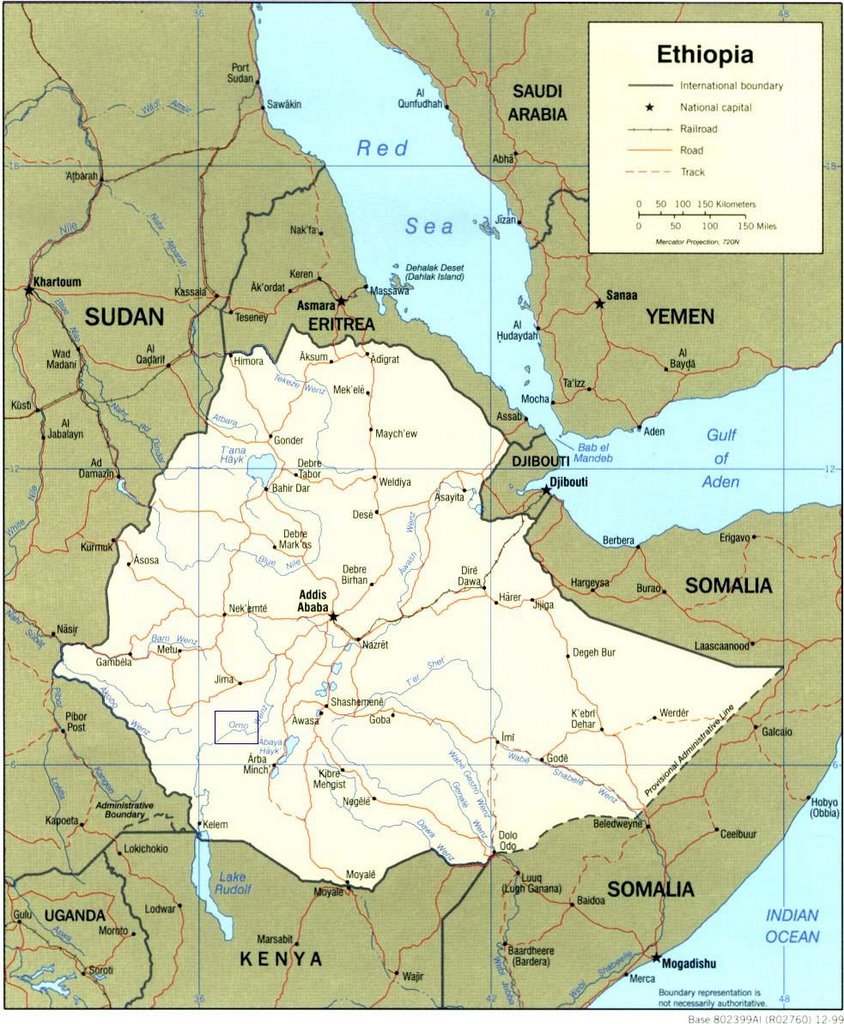
On Thursday, Kenya announced African peacekeeping troupes will be sent to Somalia in few weeks or months. This comes as a surprise as the Transitional Government was asking for foreign peacekeepers since its formation in 2004. The UIC and most of the Somalis are opposed to any peacekeeping force that includes Ethiopia, Kenya or Djibouti for historical reasons (the UIC is opposed to all foreign troupes). Any such deployment will require the approval of the U.N. Security Council and certainly the main factions in Southern Somalia.

The transitional government finally agreed to continue talks with the UIC (United Islamic Courts). Earlier, talks were held in Sudan 22nd of June but the Transitional Government withdrew from the talks because of fears the UIC were going attack their headquarters in Baidao. But the actual reason, it turns out was there disagreements between the President and the Prime Minister. The former wanted to negotiate with the UIC while the later was not keen on the idea. Subsequently, there were mass resignations from the cabinet to force a no-confidence vote and impeach the Prime Minister. It seems the government finally settled their disagreements and realized their was no other way but to negotiate with the UIC.

It was evident this week the conditions in Mogadishu have improved a great. The international airport received flights for the first time in 16 years. Our correspondent in Mogadishu who is a Somali told me how the people in Mogadishu saw the opening of the airport as a new beginning. There was also the initiative to cleanup the city. The city had piles of rubbish and dump site everywhere in the city, a reminisce of the 16 years of lawlessness. The UIC asked the city residents to cleanup “their” city, the UIC supplied the tools and the residents did the work. It’s symbolic of the grass root support the UIC has in Mogadishu.

There were reports of the UIC militia reaching the port city of Hobyo in Central Somalia. The UIC denied capturing the city but the smaller ports between Mogadishu and Hobyo are already under their control. The self-governing state of Puntland in just on the north of Hobyo. The UIC and Puntland are from two different tribe bases that had violent clashes in the early 1990s (Puntland and UIC did not exist then). It’s unlikely the UIC will want a confrontation of this sort. I don’t think they will (can) move anywhere north of the divided city of Galkayo which marks the borders of Puntland.

In another development, the UIC leader Sheikh Sharif Sheikh Ahmed announced the UIC will grant amnesty to the worlds they chased from Mogadishu if they wished to return. A number of these warlords are part of the Government which agreed to hold talks with the UIC. I doubt whether these warlords will want to return to Mogadishu as mere civilians.

Meanwhile the UN is warning of severe humanitarian crisis in Somali due to droughts and insecurity. The number of Somalis in need of humanitarian aid is estimated at 1.8 million, the UN says that number may double in the coming few months.

There are reports of Ethiopian army moving deeper into Somalia, again. As usual, the Ethiopian government denies that it’s army had crossed the border. It will be dangerous if they come into contact with the UIC militia, but surely Ethiopia will be careful of that.


Links
African troops set for Somalia role (Reuters)
Islamist militia take key Somali port (Reuters )
مطار مقديشو وقصة إعادة بناء الصومال - الجزيرة

Filed Under: ,

Aug 16, 2006

Various news from the Middle East

Israeli bombs continues to kill Lebanese civilians

Few minutes after the UN announced a cease-fire, Lebanese civilians (mostly children) returning to their homes were killed by unexploded bombs left by the Israel army.

Israel Planned Hezbollah Bombing
According to Seymour Hersh, Israel had prior plans to bomb Hezbollah and the US had known about it. There report doesn’t claim that the US encouraged Israel. US officials have denied any prior knowledge. But according to Shimon Peres speaking at CFR, he says that the US government is taking a harder line than Israel - which I find amusing. Hezbollah has previous justified the capture of the Israel soldier, that Israel was planning to attack them anyway. This is interesting because if true, this would mean that Hezbollah had done the obvious thing and the that they had not started the war.


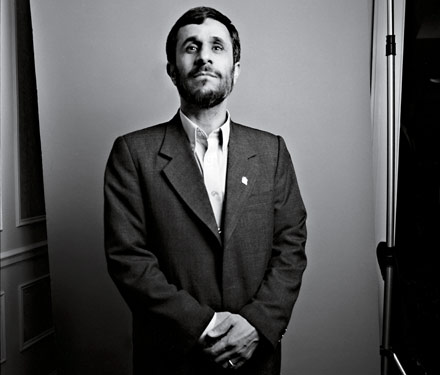
Iranian president Ahmadinejad congratulates Emile Lahoud

President Mahmoud Ahmadinejad in a phone talk with his Lebanese counterpart, President Emile Lahoud, congratulated him and the Lebanese nation, calling the Lebanese resistance "The banner of grandeur and pride for the entire Islamic Ummah." ... etc.

Translation of Nasrallah's Divine Victory Speech Available
The translation of Nasrallah's victory speech can be found here.


Iranian President Blogs


The eccentric Iranian president Mahmoud Ahmadinejad has created a blog for himself. In his first post he talked about his youth and a question to his readers if they think "US and Israel are starting a new world war". It will interesting to occasional read his posts. You can reach his blog here.


Filed Under: , , , ,

Flooding in Ethiopia kills hunderdreds


More than 300 hundred people have died in Southern Ethiopia as a result of flooding. Thousands are stranded and at least another 800 are feared dead.

Links: BBC
Filed Under: ,

Aug 15, 2006

Who won the war and few more questions?

The war has finally stopped and the Lebanese people are starting to go back to their homes. Already Hezbollah, Israel and Syria are all declaring victory but there are still many questions unanswered:

Who won the war?

Is there a New Middle East?

What did Israel and Hezbollah gain from the war?

How does the Arab public see the US role?

Who won the media war?

What will the Syrian role be after this?

Did Iran benefit from this war how and why?

Arab leaders are angry of Iran’s role, what will they do now?

What implications will this have on the Iraq situation?


The real victims of this war are the Lebanese people who lost their homes and their loved ones, now they've to go back and rebuild their shuttered lives.

Filed Under: , , , ,,

The Saudi Predicament

Saudi Arabia is the most influential Arab country. The two holiest mosques in Islam is in Saudi and millions visit Mecca for pilgrimage every year. But that is not all, Saudi Arabia is one of the wealthiest Arab states and millions of Arabs - and others - went to work and better their life for decades.

But Saudi Arabia is facing difficult challenges (and choices) on all levels today. Internally Saudis face enormous economic difficulties, even with oil prices souring. They have one of the highest youth populations in the world and a whooping 33% unemployment. The voice for political change have never loaders. You can see Saudi dissidents
nowadays on the BBC and Aljazeera speaking against the government, be it from abroad. This was unheard of before the 1990s.

In the gulf, Saudi Arabia has a rocky relationship with its neighbors. It’s seen as the giant that’s difficult to please. If a bridge, a road or pipe has to go through Saudi then the other smaller gulf countries will think twice before proceeding. A recent gas pipeline from Qatar to Kuwait was canceled because of the Saudis refused to allow it to go through their territory. Another project was a bridge from Qatar to UAE that had to go through Saudi but again it was canceled.

In the Persian Gulf, Saudi Arabia is deeply alarmed by the “Shia Threat”. The Saudis have no foothold in Iraq, they opposed the war (though they wanted Saddam out) and have been very reluctant to lend any support, at least not publicly. The Shia majority government in Iraq sees Saudi Arabia as, at least, unfriendly if not supporting the resistance. Even worse, Saudi Arabia and the US are concerned with Iran’s growing influence in Iraq.

Iran is another major worry for Saudi Arabia, they have supported Iraq against Iran and paid the US billions to arm Iraq. Saudi also see Iran getting stronger and ever more influential in the region. Add to it the prospect of a nuclear-armed Iran. They also fear Iran is enticing the Shia minority in the East.

But worst of all for the Saudis, Iran is becoming more involved in Arab affair. IranSyria and of course of Hezbollah. Saudi, EgyptJordan have all made their feelings clear about Hezbollah’s attack on the IsraelIran is hijacking the Israel-Arab conflict.

Globally Saudi relationship with the US has been stretched to say the least since 9/11. Security was the major sticking point between Saudi and US.
is a close ally of Iraqi government, and soldiers. The Arab league as a whole is afraid that But nowadays the US is also worried about Saudi-China relations. It has been growing fast and the Saudi are making China connection as visible as possible.

Then there is the question of succession. In Saudi the rule is passed between brothers, the founding father of Saudi had about 45 sons. The Al-Saud family is over 7000 and already crowd the Saudi officialdom. King Abdulla is in his 80s and so is his immediate successor. There is also the aspiring second generation, a whooping 150 senior officials already in their 60s and 70s.

It will be interesting to watch how the ruling Al-Saud family will respond to these challenges. What - if any – political reforms will they make? What policies would they adapt to improve the economy and create jobs? Will they continue to keep distance from Iraqi government or get involved? How will they contain Iran’s influence in the Arab world? And above all, what kind of leadership will the Saudis show in the Arab league.

Filed Under: , ,

Aug 13, 2006

Hereditary dictatorships

In the 1990s the speculation grew about the imminent departure of some Arab leaders. The succession for monarchies such Jordan, Morocco and Saudi was mostly clear however in Syria, Egypt, Libya and Iraq there were speculations. Asad, Mubarak, Gaddafi and Saddam all started grooming their sons to succeed them while denying any intentions of inheritance of power.

Asad was the first to go and was succeeded by his son Bashar. Saddam’s plans for Qusay were spoiled by the US invasion. But Gaddafi and Mubarak are continuing their plans for their sons.

The sons are very different from their fathers, they did not live through the rough times of independence, coups and war. They grew up under their father’s absolute rule and had all their wishes granted. They’re also more educated – some are - and are aware of the negative perceptions the world has about their fathers and eventually them. They also have to deal with the old guard that served their fathers, who will be reluctant to any change.

It will be interesting to see if these successions come true and how much different will the sons be from the their fathers.

Filed Under: ,

Aug 12, 2006

For the benefit of Iran

For decades, Arab states worked to position Iran as an outsider in the Middle East. However, this dynamic has been shifting since the collapse of the USSR. In Central Asia, the Soviet Union's fall led to the independence of countries with deep cultural and historical ties to Iran. Many of these nations share linguistic and religious similarities, with large Muslim populations. Notably, Azerbaijan, alongside Iran, has a Shia majority. Additionally, Iran has cultivated strong relationships with both Russia and China, expanding its influence further.

Before 9/11, Iran came close to war with the Taliban in Afghanistan. As a result, Iran supported the US-led overthrow of the Taliban from the outset. The new Afghan government has since maintained friendly ties with Tehran. However, the greatest geopolitical gain for Iran was the US invasion of Iraq. Saddam Hussein, Iran's archenemy, had long mobilized Arab support against Iran, most notably during the Iran-Iraq War, which lasted a grueling ten years. Arab countries backed Saddam politically and financially, leaving Iran isolated in the Middle East. Excluded from Arab trade zones, agreements, and the Arab League, Iran had little say in regional matters, including the Arab-Israeli conflict.

The US removal of Saddam was a significant win for Iran, but it was only the beginning.

Iran’s Influence in Post-Invasion Iraq

Before 9/11, much of the Iraqi opposition, particularly Shia groups, were based in Iran. Many prominent Shia clerics, including Ayatollah Sistani (born in Iran), have strong connections to the country. Following Iraq’s elections and the rise of Shia leadership, Iran quickly established influence over Iraq’s government, political parties, and security forces—a fact widely acknowledged by observers.

Arab states, which once held significant sway in Iraq, now find themselves with little stake in the country. This shift has alarmed Arab leaders, exemplified by Jordan’s King Abdullah coining the term “Shia Crescent” to describe Iran’s growing influence in the region. The concern is that a stable and Shia-led Iraq could wield tremendous influence across the Middle East, further enhancing Iran’s power.

Iran’s Strategic Moves

Iran has capitalized on these opportunities. Its relationships with Afghanistan and Iraq have strengthened significantly, and it has leveraged its alliances with Syria and Hezbollah to insert itself into the Arab-Israeli conflict. Few dispute that Hezbollah is not only supported by Iran but was also created by it. The recent conflicts ignited by Hezbollah have unfolded with, at minimum, Iran’s tacit approval.

Challenges to US and Arab Responses

Both the US and Arab states appear increasingly powerless to curb Iran’s rising influence. Speculation about a potential US attack on Iran persists, but such action seems unlikely. Iran's strategic position, opposite the Gulf's vital oil and gas fields, coupled with its military capabilities, would allow it to inflict significant damage even if it were ultimately defeated. This strategic reality has led the US and Israel to propose the idea of a “new Middle East”—one that excludes Iran.

Whether such a vision is achievable remains uncertain, but it is undoubtedly a development worth watching closely.

Aug 10, 2006

Arab leaders fear Shia rise


Arab leaders are increasingly fearful of the expanding influence of Shia power in the region, which they largely attribute to Iran. King Abdullah of Jordan famously warned of a “Shia Crescent” stretching from Iran through Iraq, Syria, and Lebanon. The rise of Iraq’s Shia leadership, Iran’s nuclear ambitions, and the recent Hezbollah attacks have only heightened these concerns.

Why Are Arab Leaders Concerned?

The fear of Shia power is not rooted in sectarianism alone. Arab states have longstanding grievances with Iran, particularly stemming from the Iran-Iraq War, during which most Arab countries supported Iraq. They know Iran has not forgotten this.

Additionally, there are significant Shia minorities in the Gulf states, including Saudi Arabia, Bahrain, Qatar, and the UAE. Bahrain, in particular, has experienced Shia-led demonstrations, highlighting the potential for unrest within these nations.

Iraq: The Major Concern

The primary focus of Arab leaders’ unease is Iraq. As one of the largest and potentially wealthiest Arab countries, a stable Iraq would wield immense influence in the region. Iraq’s Shia majority, closely tied to Iran, adds to this concern. During Saddam Hussein’s rule, many Iraqi dissidents—primarily Shia—found refuge in Iran, and several prominent clerics, including the influential Ayatollah Sistani, are originally from Iran. Since the fall of Saddam, Iran has deeply penetrated Iraqi politics and society.

The Lebanon-Israel Conflict

The ongoing Lebanon-Israel conflict has further exposed divisions between Arab governments and public opinion. Countries like Saudi Arabia, Jordan, and Egypt have condemned Hezbollah’s actions, even though the majority of the Arab populace supports the group. Hezbollah’s ties to Iran and its role in the conflict have only fueled Arab leaders’ fears of Tehran’s growing regional influence.


Filed Under: Arab, Islam, Shia, Persian Gulf, Middle East

Aug 9, 2006

Outsourcing Torture!

As weird is as it sounds, this is exactly what happened. Some countries have laws against torture and there is the Geneva Conventions. One of these countries is the US. In the wake of 9/11, the US government sought to "loosen up" the laws so harsher techniques can be used when interrogating suspected terrorists.

But that was not enough for some people, particularly those in the Pentagon and the CIA so they came up with an ingenious idea – why not outsource it to the some of our allies? Some of the closest allies of the US in the Middle East are lets say "Pro-Torture" who embrace torture whole-heartedly and would be happy to lend their services to the US (after all, what is torture of couple of terrorists among friends). So, the CIA would ship suspected terrorists to various countries in the Middle East - mainly Egypt, Jordan and Saudi – to be tortured by the experts.

How about that for outsourcing?